


Hi, I’m Shan, and I run Xandro Lab, a longevity science supplement brand in Singapore.
Last August I wrote that longevity needed blends. One ingredient at a time, I said, would not take us far. The future was protocols.

Protocol X is the backbone of Xandro. It has more marketing dollars behind it than anything else we sell. It is also our lowest-margin product and the hardest to sell. Our top three products are all single ingredients. Singles sell two to five times the volume of our formulas.
Protocol X and LPC Neuro launched around the same time. LPC Neuro took off. Protocol X kept hitting a ceiling, however much we improved it. I told myself it needed time. Two years later, and three more formulas on, the pattern has not changed.
So this post takes a position. For a supplement business, single ingredients are the better product to build and scale. I don’t mean better for health outcomes, which is a different question. I mean better as a business: easier to explain, trust, compare and build on.
Here is my opinion on this.
Today’s reading
What the numbers say
What I got right and wrong last year
Taking magnesium is simple
Single ingredients are research-backed, formulas aren’t
Why formulas are harder to make
The counterexamples: AG1, IM8 and Blueprint
The catch with single ingredients
What this changes for Xandro
What the numbers say
Across three years of our numbers, no formula has matched the uptake of our strongest single ingredients. The formulas are doing okay. They are not doing great.
Protocol X shows it most clearly. People now know about it, and the storyline is strong. The volume has not followed.
With Protocol X, we kept working on the formula and trying to make it more stable. We have been at it for more than two years, hoping each improvement would lift sales. There is a ceiling, and we have not got past it.
For a while I thought Protocol X was a one-off. Then we launched three more formulas over the last year. They followed a similar path. None of them is easy to sell.
One caveat. We are one small brand in Singapore, but the pattern repeats across products. That is why I think it isn’t a coincidence.
What I got right and wrong last year
Last August I made three arguments. Longevity is a systems problem. A fragmented stack is hard to follow. Blends could fix that, if we dealt with the trade-offs.
I still stand behind the first two. Ageing involves many systems, and people do struggle to stay on a routine that has six bottles and a spreadsheet.
The third is where I (believe) am wrong, and the warning signs were in my own post. I wrote that blends force dosing trade-offs. Evidence on the blend itself is weak. I wrote that some of our liposomal ingredients clumped. I treated all of these as problems that iteration would solve. By then we were already on version three of Protocol X, and we kept going.
The screenshots in that post show something I missed. Customers in our community groups were taking Protocol X alongside several of our other products, and asking how to fit everything together. They had not swapped their single ingredients for the formula. They had added the formula to a stack they were already building.
I read those screenshots as proof that people need a system. They were also telling me that people want to choose their own ingredients.
Taking magnesium is simple
Our repeat rate on magnesium, NMN and LPC Neuro is 60% or higher. On Protocol X it is 40%. I think the gap comes down to one thing. People already know how to use a single ingredient.
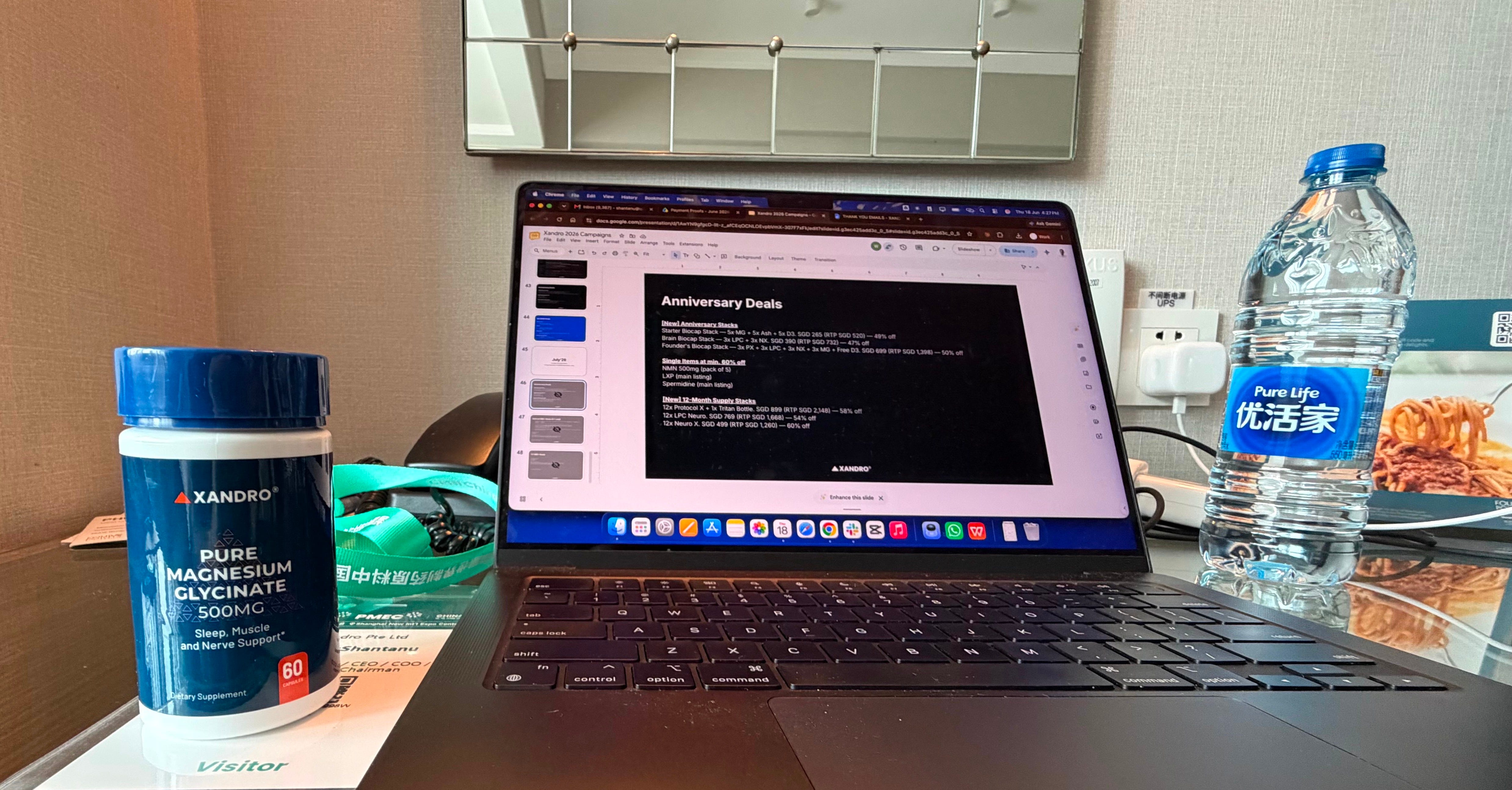
Take magnesium. Researchers, doctors, trainers and creators have been explaining it for years. By the time someone reaches our page, the education is done. We only have to show why our version is better: the form, the dose and the quality.
NMN works the same way for the people who buy it. LPC Neuro is a newer ingredient, but it sits inside omega-3, a category people already understand. The customer only has to see why this is a more advanced form of something they know.
A formula starts from zero. The customer has to ask why these ingredients are together, whether each dose is meaningful, whether they need all of them, and whether they are paying for things they already take. Then comes the routine. When do I take it, with what, and in place of what? Nobody else explains that for us. We have to do all that.
That is the quiet advantage of a single ingredient. The whole category explains it for you, including competitors. With Protocol X, we do all of the explaining ourselves.
It also comes down to control. With a single ingredient, someone can change one part of their stack without touching the rest. They can adjust the dose. But a formula asks the customer to trust our choices, which is a big ask at a high price with many unfamiliar ingredients. The screenshots from last year were people trying to keep that control while we handed them a formula.
Single ingredients are research-backed, formulas aren’t
A single ingredient is studied by many groups. Independent researchers publish research on creatine, magnesium and omega-3.
Formulas mostly borrow their evidence. A brand points to research on ingredient A, ingredient B and ingredient C, and uses those separate studies to support the finished product. That does not tell you what the whole formula does. Safety needs to be assessed separately too. Missing research does not make a formula unsafe, but it does lower confidence in the combined effect.
As I wrote last year, nobody has the incentive to change this. Single-ingredient studies are usually funded by the people who make the ingredient. Blends belong to consumer brands, so those trials only happen if the brand pays for them.
We ran them. The NAD study on Protocol X ran, and the results are promising. Protocol X performed as well as NMN. Our in-vitro work with NUS on Protocol X has also shown strong results. Right now it’s pending to be made public.
To build the credibility a single ingredient gets, a formula needs several finished-product studies over several years. Few supplement companies have the money, patience or research capability for that.
Why formulas are harder to make
With Protocol X, we wanted the cleanest formula we could make, with no fillers. The catch is that we were putting active ingredients together without anti-caking agents.
I have received numerous complaints of the product clumping. It absorbs moisture and goes hard, which not many people like. It also reduces how well the product dissolves.
The worst part is that you can’t tell which ingredient is causing it. With a single ingredient, there is nothing to isolate. In a formula, it is almost impossible to find out which ingredient is responsible. We have been working on the stability for more than two years.
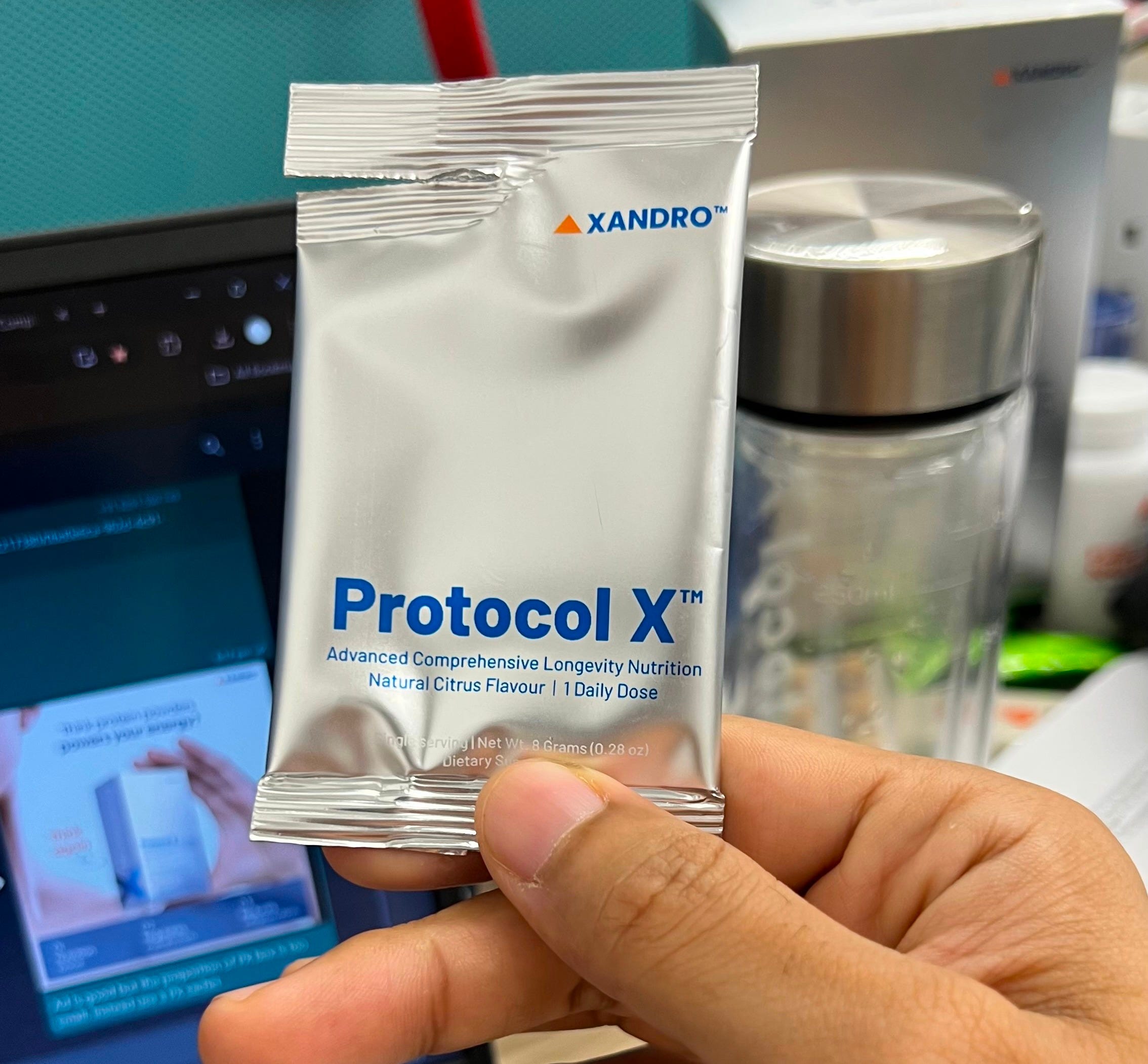
Single ingredients skip all of it. There is no blending and no stability to hold across several ingredients. That makes them simpler and cheaper to make. A formula also forces dosing trade-offs. To keep the serving size and cost manageable, something gets cut so that something else can fit.
The counterexamples: AG1, IM8 and Blueprint
A fair reader will ask about the big formula brands. They are the strongest argument against me, so here they are.
AG1. AG1 is one of the best-known formula brands in the space, and it is moving towards single ingredients. In June it launched AG1 Pro, a creatine-infused version of its powder, after saying that over 30% of its customers were already stacking creatine. This month it released a standalone AG1 Creatine. Its own customers were building the stack, and it followed them.
IM8. IM8 shows that a formula can scale. Its parent company raised its 2026 revenue outlook to $220 million to $230 million. It has also needed heavy marketing to get there. In the first quarter it spent $22 million on marketing and posted an adjusted EBITDA loss of $5.6 million. Its next launches include a creatine, alongside hydration and kids gummies. I expect more formula-led brands to simplify the same way.
Blueprint. Blueprint already sells a lot of single ingredients alongside its formulas.
Huel. Huel is a food brand, and food is formulation-led. People judge a recipe by the taste and the experience of the final product. Health products work differently. Customers want to connect a particular ingredient to a particular benefit.
I see the same thing closer to home. In Singapore, I have watched single-ingredient brands scale very quickly. Starting with single-ingredients is a better starting point.
The catch with single ingredients
Single ingredients are easy to copy. Anyone can launch another creatine, magnesium or omega-3 without reproducing a proprietary formula. That is the cost of this strategy. The market is bigger, and so is the competition. You win on the things that are left:
Product quality
The form and source of the ingredient
Brand credibility
Sensible pricing
Distribution
Clear communication
Being in stock, every time
This is why branded ingredients interest me. LPC Neuro is built on Lysoveta, a more advanced form of omega-3. The customer understands the category, and the form may give us something that is harder to copy than a generic ingredient.
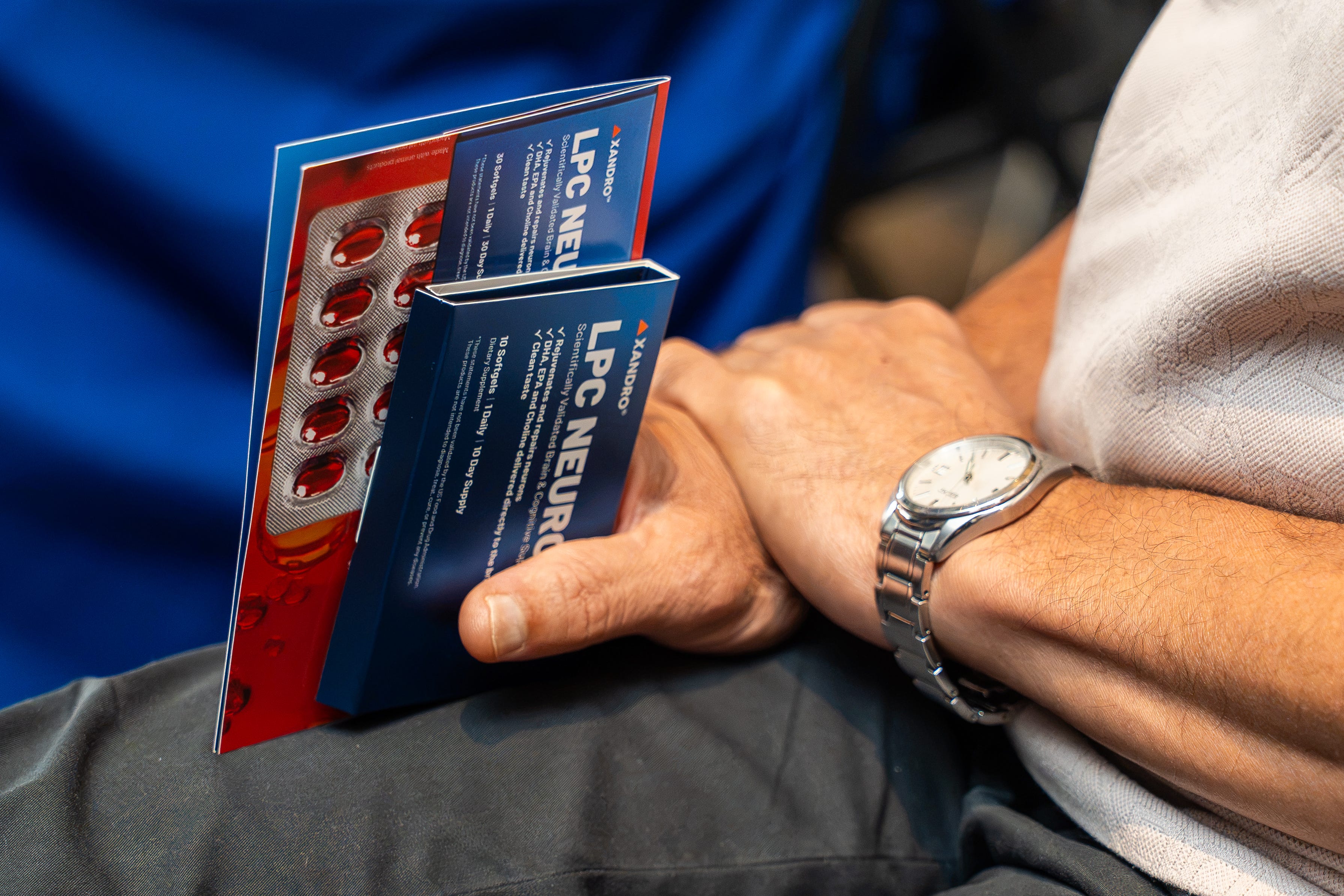
A formula is harder to copy (not really but no one wants to be the “copycat”). It is also harder to sell.
What this changes for Xandro
Two things change for us.
The first is that I am questioning any further investment in formulas. Protocol X is still the backbone of the brand and its story. But I would not put more investment into new formulas at this moment.
The second is that we go deeper into single ingredients. We have two new launches coming, a vegan omega-3 and lactoferrin. They are a major test of this argument, so here is how I will judge them:
Volume growth in the first six months
Monthly sales volume at six months
Customer feedback
Ads return on ad spend when we push them
Cohort repeat rate
There is still an open question I can’t answer. How many people really need a stack or a protocol? I still believe ageing is a systems problem, and that people will want a system one day. But the answer may not be a fixed formula. It may be modular: single ingredients people already trust, with us helping them decide what to take, when and in what order.
I don’t know yet. I will share what we learn.
Closing notes
Medicine works the same way. Many successful drugs are built around one active ingredient validated for one clinical use. Ozempic contains semaglutide. Retatrutide follows a similar one-molecule model, although it is still investigational and in Phase 3 trials.
Combinations exist too. Entresto combines sacubitril and valsartan. But the combination itself went through clinical development for a defined medical purpose.
The principle is the same in both cases. One ingredient, or one validated combination, is tied to a clearly defined benefit, and the evidence is produced on the product being used. Supplements have no such requirement. That makes it more important for us to hold ourselves to it.
Thanks for reading. Do you think stacks and protocols should be modular, or does a fixed formula still have a place?
In another news, I ran my first marathon. Here is a moment from the run.

Until next Sunday,
Shan