


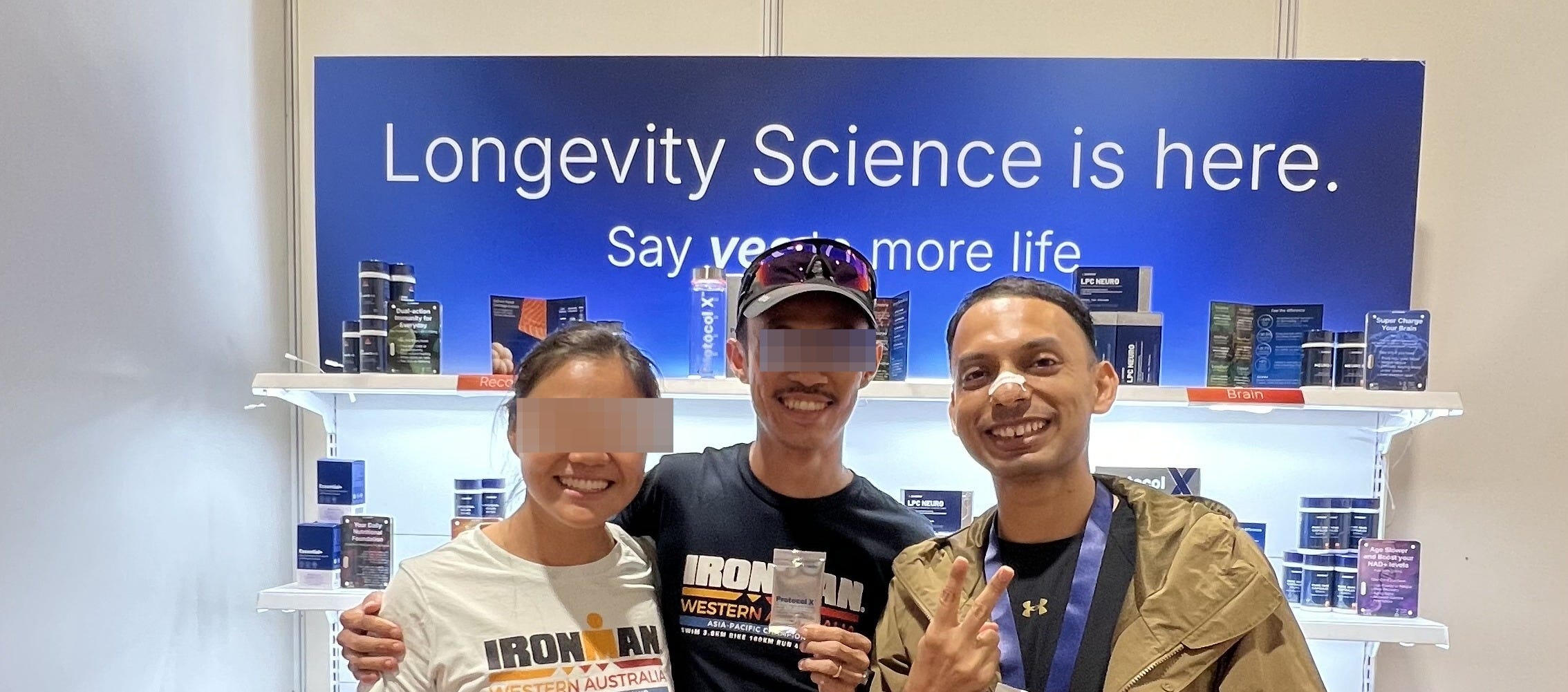
👋🏼 Hi, I'm Shan. I run Xandro Lab, a longevity science brand in Singapore. Every Sunday I write these notes, part building diary, part thinking out loud.
Three years in, I still find it genuinely hard to explain what longevity means. The more I’ve thought about it, the more I’ve realised how complicated and contested the concept actually is. I’ve talked to researchers, scientists, NUS professors, biohackers, doctors, and thousands of consumers. I also live it, in the sense that I track my own biomarkers, experiment on myself, and race HYROX while running a company that sells the very things I believe in.
Here's what I've actually landed on.
In this post
Lifespan, healthspan, peak span
What consumers actually think
The cost problem nobody talks about honestly
Longevity is an ecosystem problem
Longevity is also about freedom
What I’ve actually learned
1. Lifespan, Healthspan, Peak Span
At the most surface level, longevity means living longer. That’s the obvious read. There is a large scientific community chasing that idea hard - to prevent aging as a form of disease. David Sinclair and Bryan Johnson are the poster children. Beyond them, there are serious researchers and geroscientists working on the biology of aging, on senolytics, on epigenetic clocks, on drugs like rapamycin that show promise in extending life in animal models. The idea that humans could live routinely to 120 or 150 is no longer science fiction. It’s a research hypothesis with serious people behind it.
But some practitioners and consumers have moved away from pure lifespan as the goal. The counter-argument is obvious: what’s the point of living to 150 if the last 30 years are miserable? That framing gave rise to healthspan, which is about how many good, functional, disease-free years you get out of your total life. Not just how long you live, but how well. Preventing the things that steal quality from the second half: cancer, falls, fractures, dementia, Parkinson’s, poor sleep, cognitive decline. The ability to sleep through the night, to move without pain, to remember things, to not be a burden to the people around you. These goals resonate more viscerally with real people than adding years to a lifespan counter.
Then there’s a third framing I’ve started using more, one that Dr. Rhonda Patrick talks about: peakspan (Rhonda’s blog and the peakspan paper). Not just living longer, not just avoiding disease, but extending the years where you’re operating at the highest level. For me, that means being a high-performing CEO for 30 or 40 more years. Being able to compete at HYROX at 55 the way I can now. Maintaining the physical and mental output that makes work meaningful and not just endurance. Peak span is the most personally motivating frame for me, and I think it’s resonating more with the kind of driven, performance-oriented people who are starting to take this seriously in their 40s and early 50s.
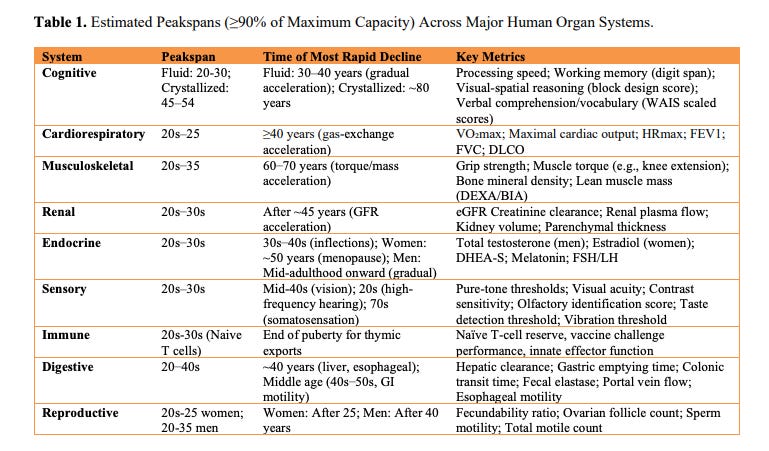
These three frames aren’t in conflict. They’re layers. Most people who get into longevity start somewhere on that spectrum and over time find themselves caring about all three.
2. What consumers actually think
Here’s the harder truth: most people don’t buy any of it.
When I say longevity to a consumer, the first response is scepticism. And when I follow that up with “we sell supplements for longevity,” the scepticism doubles. That’s a reasonable reaction. The supplement industry has a long history of overpromising, and the longevity space attracts both genuine scientists and complete charlatans in roughly equal measure. Distinguishing between them requires work most people don’t have time to do. (I plan to cover this is in depth when I write about “everything wrong with Singapore longevity ecosystem.”)
In Singapore, I’ve found people to be more open than I expected. It’s a health-conscious market, the population is educated, and there’s a cultural tendency toward preventive health that makes the conversation easier. When I’ve had the same conversation in India, the dismissal is faster. Though that’s shifting. The Indian market is changing quickly, especially among the urban professional class.
But even in receptive markets, there are very different camps among people who do take longevity seriously.
On one end, you have the devotees. These are people who cook exclusively with olive oil, who’ve eliminated gluten, who monitor every variable they can. They know their intolerances and act on them completely, not partially. Some are precise about air quality in ways most people would find eccentric. Bryan Johnson walking out of a major Indian podcast because the room’s air quality was too poor that his air purifier couldn’t fix, sounds absurd, until you realise he has built his entire life around measurable environmental inputs. These people are not performing wellness. They are genuinely optimising every input they can control.
On the other end, you have people who believe that life is for living. That you shouldn’t deprive yourself of social meals, a glass of wine, the small pleasures that accumulate into a full life. Their argument is that stress about optimisation is itself a health burden, and that the research on community, friendship, and emotional connection is as strong as the research on any supplement or intervention. They’re not wrong either.
Both camps have evidence on their side. The difference is in how much of your life you’re willing to reorganise around health as a primary objective. Tbh, most people are somewhere in the middle and moving slowly toward more structure as they age.
3. The cost problem nobody talks about
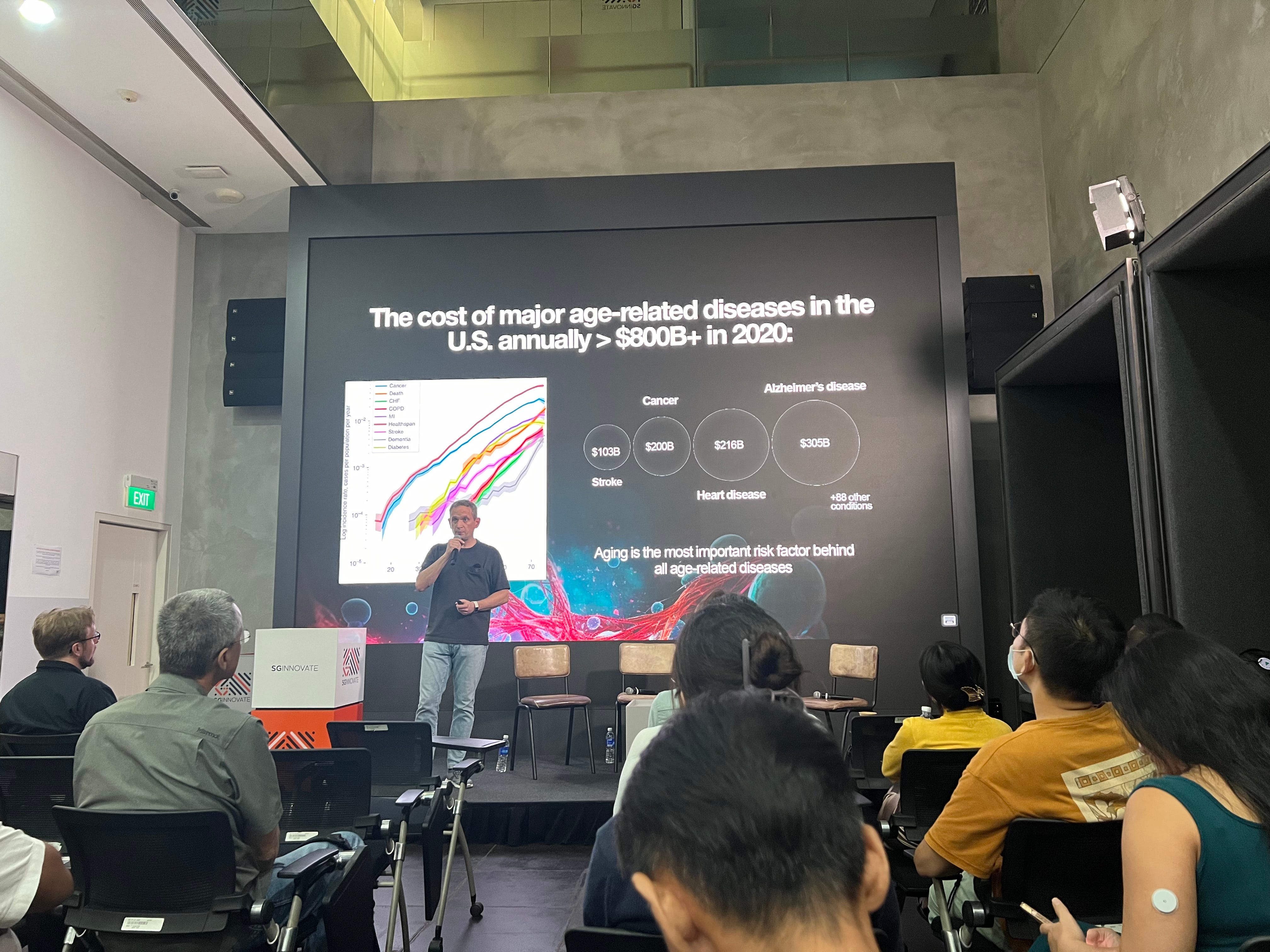
There is a structural problem with longevity that doesn’t get enough honest conversation: almost everything in this space is wildly expensive.
Whole-body MRI scans. Comprehensive biomarker panels. Continuous glucose monitors. IV drips. Longevity clinics charging thousands for programmes. Medical spas. High-end coaching. The supplements themselves, if you’re buying quality. Stack all of this and you’re looking at a lifestyle that is simply unavailable to most people on earth.
The medical field compounds this. I say this as someone who sells supplements and knows we’re not exempt from the critique: the healthcare and medical device industry charges what it does not purely because of the cost of science, but because it can. The US healthcare system is the most dramatic example, but the dynamic runs through the whole industry. Innovation in longevity that stays expensive isn’t really innovation in population health. It’s a premium product for people who were already going to be okay.
Supplements occupy a strange middle position. More accessible than medical interventions, but more expensive than food. There’s pressure on companies like mine to justify that cost with rigorous science, with transparency, with real evidence. That pressure is good. The companies that survive the next decade in this space will be the ones that earned the trust, not the ones that had the best marketing.
4. Longevity is an ecosystem problem
Longevity is not one industry. It’s several industries that haven’t fully accepted they’re in the same business.
Food is foundational. Sleep is foundational. Exercise, increasingly understood to be the most powerful longevity intervention available, is foundational. Then come supplements. Then coaching, diagnostics, clinical interventions, devices, and so on. These things interact. Someone popping an ashwagandha capsule while living in a city with bad air quality, chronically under-slept, sedentary, and socially isolated is not going to get much out of the ashwagandha. The supplement is rounding error compared to the structural problems.
Exercise has had a real moment in the longevity conversation, especially resistance and strength training for older adults. What I found interesting recently was someone I know who exercises based on how his joints feel that day. Not a programme. Not a number. How his joints feel. At 30, you don’t train like that because you don’t have to. At 55, if you push something wrong, you’re in pain for two weeks. That attentiveness, that calibration, is a form of longevity wisdom that no app has properly captured yet.
This is actually where two things matter - senior specific coaching and senior specific devices.
On coaching: not generic personal training, but trainers and coaches who actually understand the older body — how recovery works differently at 60, how an irreversible injury at 55 can cascade into years of setback, how the goal shifts from building a physique to preserving function. A pulled muscle at 30 is an inconvenience. A bad fall or a torn ligament at 65 can be the beginning of a long decline. That expertise is still rare and expensive where it exists at all.
On devices: the ones that could give an older person a meaningful signal: can you safely lift 20 kilograms today, or should you do something lighter? Is there a way to quantify joint readiness, inflammation state, recovery quality, before you load up? We don’t have cheap, reliable answers to those questions yet. When we do, the exercise-longevity connection will get much more precise.
Both problems are solvable. The coaching one is solvable now, if the industry decides to prioritise it.
5. Longevity is also about freedom
This is the part that took me a while to say clearly, but I believe it now.
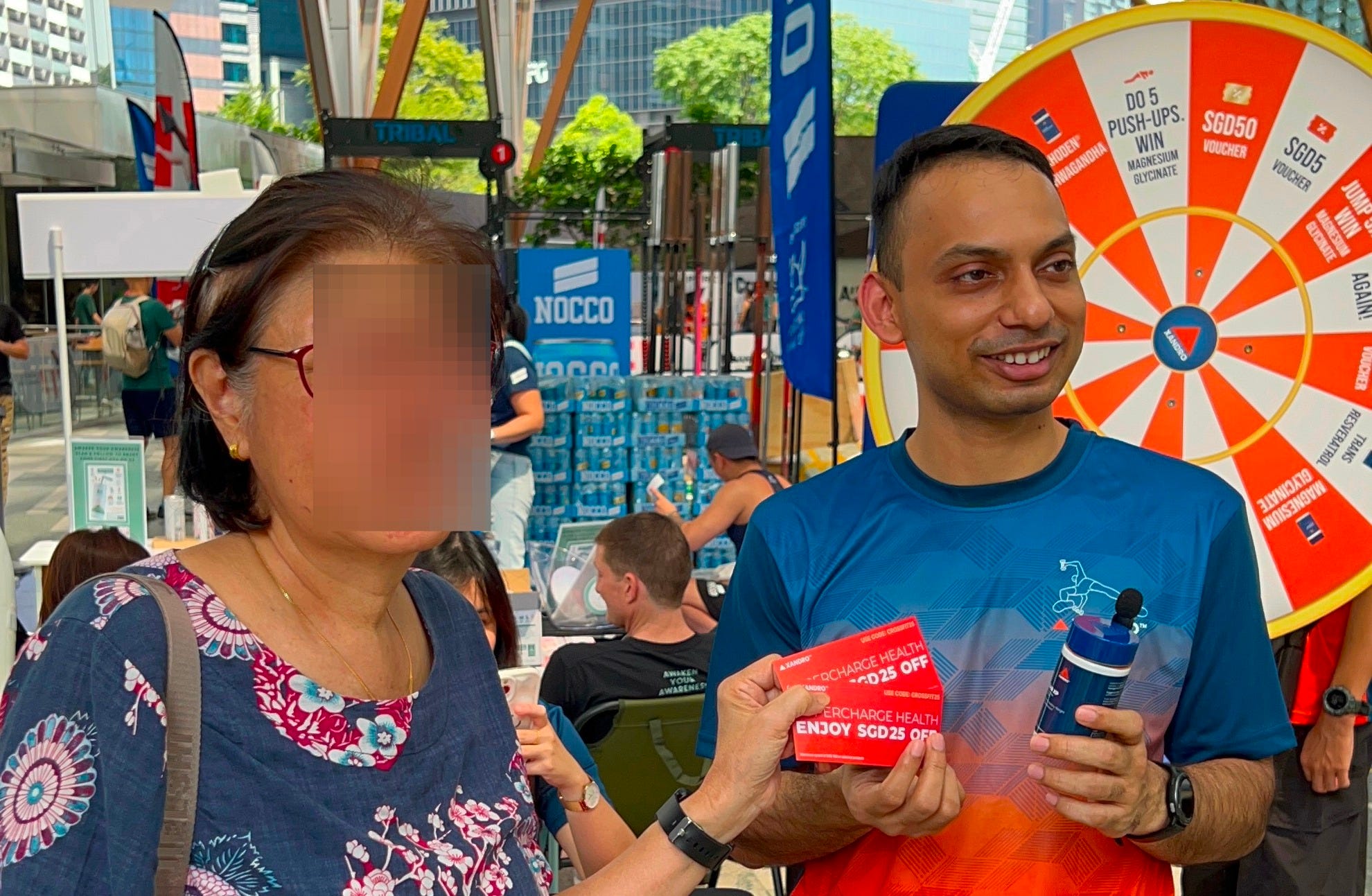
Longevity is partly about biology. But it’s also about your ability to make choices that serve your health. And that requires a kind of freedom.
Singapore has a real problem with stress. It’s a high-output, high-cost city where the professional bar is constantly rising. Can you solve that with ashwagandha? Partially. It has evidence for cortisol modulation and stress resilience. But no supplement fixes a 70-hour work week, a relationship that drains you, or an environment where the air is bad and the light is wrong and you haven’t seen a park in a month.
What I mean by freedom is this: do you have the actual capacity to change a situation that’s harming your health? Can you leave a toxic job, a toxic relationship, a city that isn’t working for you? Can you choose where you eat, how you sleep, how you move, who you spend time with? Not everyone can, and that’s not a personal failing. It’s a structural one. Longevity at scale has to reckon with this.
The technology side will help. AI tools are already compressing the time it takes to do complex work. In theory, that should free up time and reduce certain kinds of cognitive load. In practice, it raises output expectations at exactly the same rate, so the stress doesn’t go anywhere. It just changes form. This is the treadmill problem of productivity.
Slowing down, actually and structurally, not just meditating for ten minutes before opening Slack, is one of the hardest longevity interventions. And I think it requires more than willpower. It requires building or finding a life in which the pace is something you control.
6. What I’ve actually learned
Three years of building in this space has left me with something I’d call informed humility.
The science is real and emerging. Certain compounds do things at a cellular level that matter. NAD+ decline is real (its need is still questioned - rightly so). Mitochondrial dysfunction with age is real. Neuroinflammation is real. The research on LPC-DHA crossing the blood-brain barrier more efficiently than other omega-3 forms is real.
But I’ve also learned that the gap between “this works in a study” and “this changes your life” is enormous, and it’s filled with lifestyle variables that no pill can bypass.
I’ve learned that the people I trust most in this space are the ones who are honest about uncertainty. The researchers who say “the evidence suggests” rather than “the evidence proves.” The practitioners who track outcomes and change their minds when data changes. The consumers who experiment carefully and don’t claim more than they observe.
I’ve learned that longevity means genuinely different things in different places. A 50-year-old in Singapore worried about cognitive decline is in a different conversation than a 50-year-old in a polluted, high-stress city in Southeast Asia trying to manage chronic inflammation from environmental exposure. The interventions, the priorities, the whole framing is different.
And I’ve learned that longevity is ultimately about the quality of time, not just the quantity. Most of us are going to live long lives whether we try or not. Unless something sudden and unfortunate happens, we’re going to be alive for a very long time. The question is whether those years will be spent building, creating, connecting, moving, thinking clearly, doing things that matter, or managing decline, dependence, and regret.
It’s not a supplement pitch. It’s just what I believe after three years of thinking about almost nothing else.
The ecosystem is wide. The sub-industries are many. The science is still young. And the conversation, at least among people who are paying attention, is finally becoming more honest.
I’m glad I ended up here, even if I got here broke and by accident.
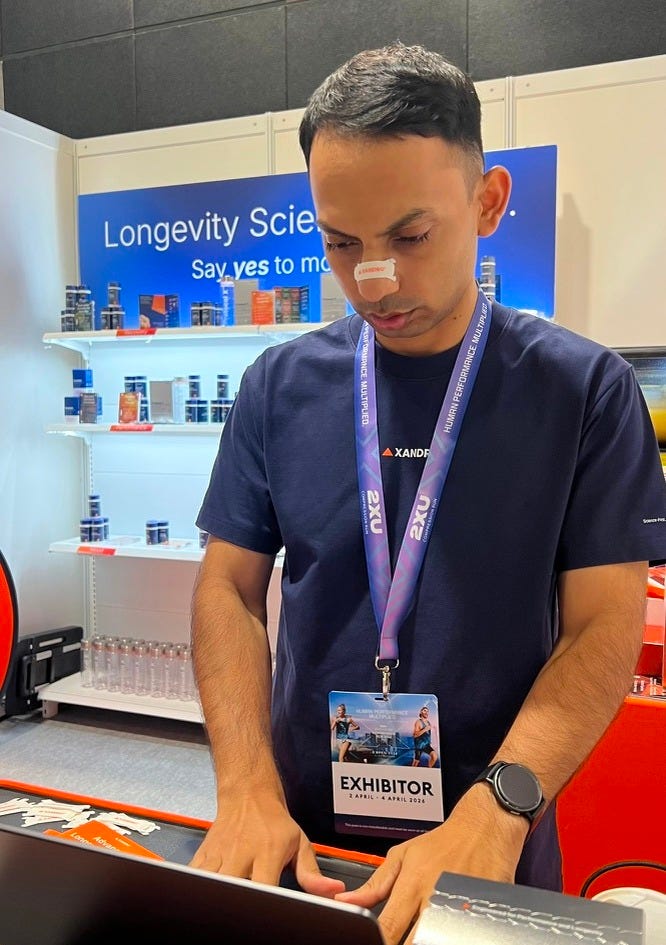
More thoughts on longevity consumers
The longevity space talks a lot about “consumers” as if they’re one group. They’re not. From what I observe, there are roughly five distinct segments, and I want to write about each of them properly in a future post.
The 30s crowd is actively preventing aging before they feel it. The 40s crowd has more money and wants to be seen doing it, saunas, cold plunges, proving they’re still in the game. The 50s crowd gets more cautious, less willing to try the extreme stuff, quietly trying to hold the line. And then the 60s and above, which is the group that breaks my heart a little, because they still have 30 years ahead of them, but many have already resigned to decline. They experiment, they get berated by younger family members for buying things they saw online, and they carry this quiet sense of the gap between who they could have been and where they are now.
Then there’s the gender gap nobody talks about honestly. Women in this space are trying harder across the board, including aesthetics. Men tend to be more resigned, defaulting to medication, a daily walk, maybe some light training. That dynamic shapes how products get built, marketed, and used, and we as an industry are not paying enough attention to it.
More on all of this soon.
If this resonated or you have thoughts, reach out. Always open to the conversation.
Shan