


👋🏼 Hi, I’m Shan. I run Xandro Lab, a longevity science brand in Singapore. Every Sunday I write these notes, part building diary, part thinking out loud.
Last week we closed year three at Xandro.
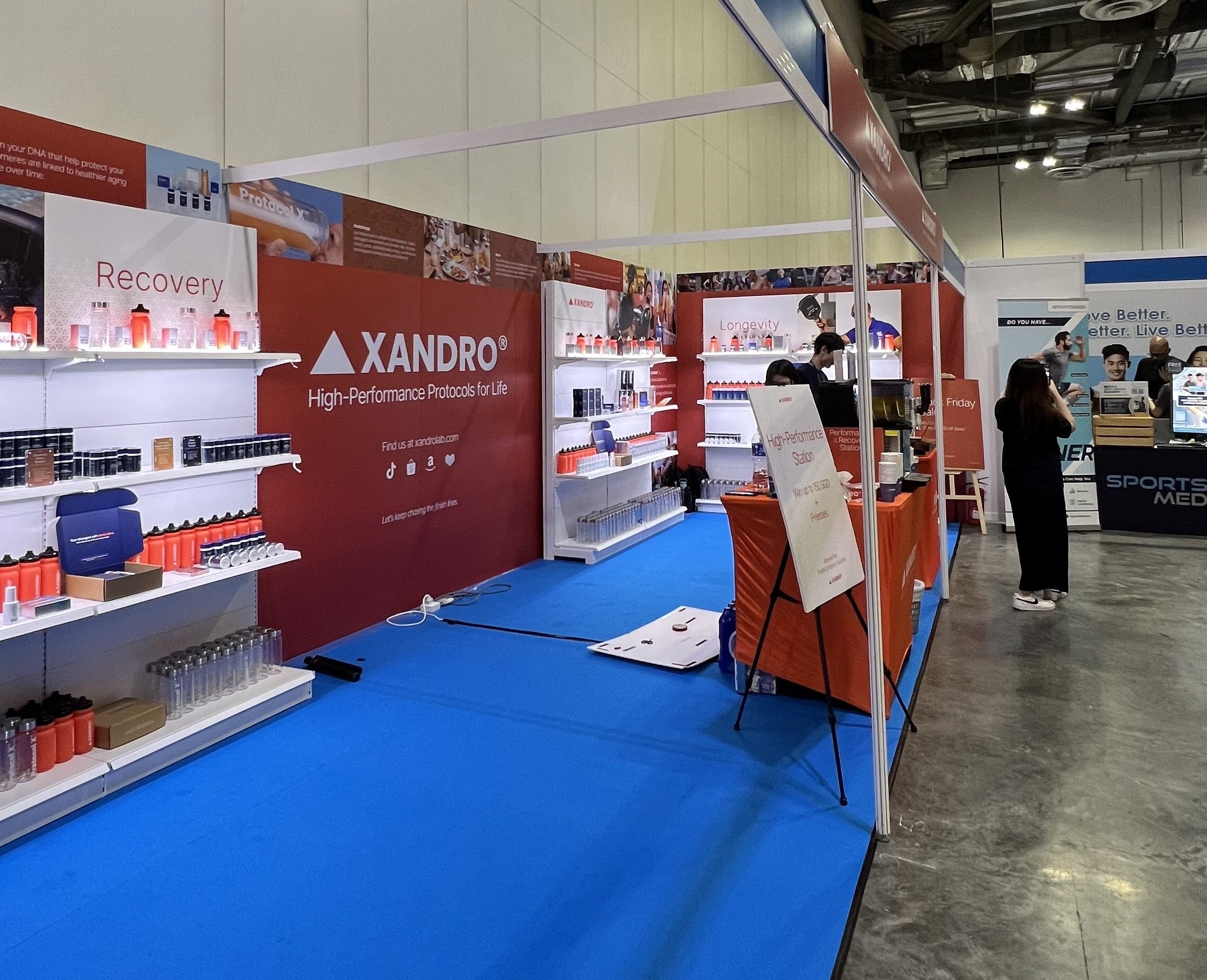
I often get asked about how the business is going, and I find myself saying this: I don’t want to be a small brand. Either we become something very large, or I’d rather be building a different game entirely. There is no version of this where I am happy running a SGD 2 million lifestyle business for the rest of my life. There is not much pie left at that size, and I am not interested in the leftovers.
So let’s talk more about this today.
In this post
Is Singapore market too cyclical?
The online math I’m actually fighting
A hundred thousand a month is not a business
Turf keepers
The leap I don’t yet know how to make
What year three actually looked like
1. Is Singapore market too cyclical?
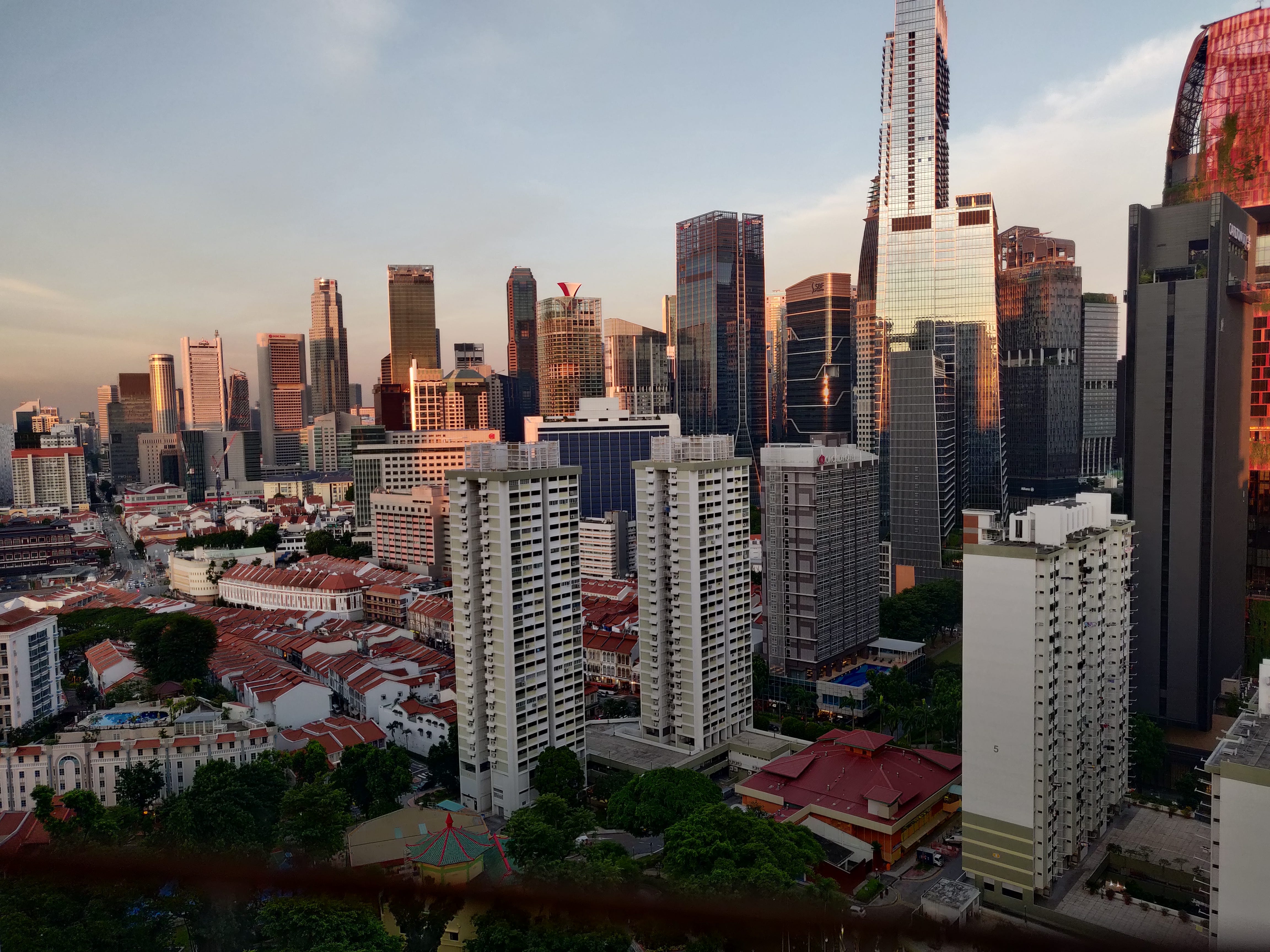
I started writing this piece with a different question in my head. I wanted to understand why consumer businesses in Singapore feel so cyclical. You see the pattern if you live here. A brand opens, weekends are packed, TikTok is full of it, and six months later it is forgotten. Rent, manpower, competition. The usual suspects get blamed. The deeper reason, I think, is simpler. The market finds you, loves you for a quarter, and then moves on.
I assumed this was a Singapore problem. The more I looked at it, the more I realised it isn’t.
Allbirds sold for 39 million dollars last month after being valued at 4 billion five years ago. A 99 percent destruction of value. The brand that defined the sustainable footwear wave became a fire sale because it had one great product and built a company as if that product was a permanent business. It wasn’t. It was a trend. When the trend faded, there was nothing underneath.
Allbirds is not unique. An entire generation of venture-backed DTC brands is going through the same realisation. They mistook early momentum for durable demand. They confused cultural heat for category ownership. They raised money on the assumption that the consumer economy they were riding would still be there on the other side of a CAC increase, a privacy change, or an algorithm update. It wasn’t.
So Singapore is not uniquely cyclical. Singapore runs the cycle faster because the market is smaller, digital penetration is almost complete, and the expat population rotates every few years. It is a compressed version of the same pattern playing out globally. The cycle is the thing. Singapore just makes it easier to see.
2. The online math I’m actually fighting
Once you accept it isn’t a Singapore problem, the next question is whether it’s an industry problem or a me problem. The honest answer is both, in different measures.
Here are our numbers.
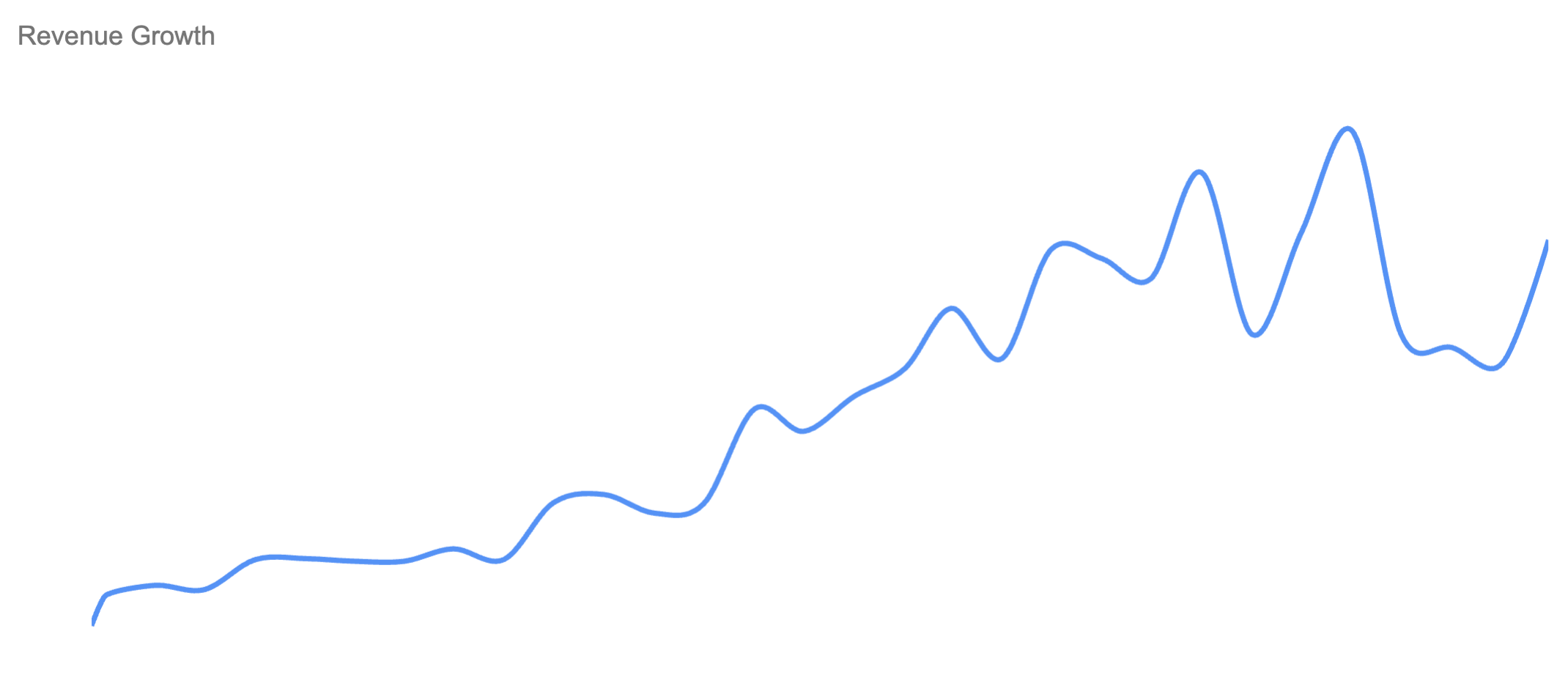
You can see the shape. A strong first eighteen months. A plateau in the last several.
I look at people I know in the space and I see the same shape. Moon Health grew very fast for last year and has flattened over the last few months. Founders I talk to in wellness and supplements are seeing TikTok numbers stagnate or decline after a year of being their best channel. TikTok Shop itself, which was the most exciting thing to happen to Southeast Asia e-commerce in 2023 and 2024, has slowed as a platform.
So it is an industry problem. Across DTC globally, customer acquisition costs are up 40 to 60 percent over the last two years. The numbers are similar for us. That’s structural.
At the same time, it is also a me problem, because while I see the industry flattening, I also see a few brands crushing it. IM8, the supplement brand championed by David Beckham and built by Prenetics, went from zero to around 90 million US dollars in revenue in its first year. They have something like 170 million US dollars in capital at their disposal, so they can throw money at every problem and solve them in parallel rather than sequentially. That is a different game from the one I am playing.
I have also watched myself grow past or draw level with Singapore brands a decade older than us. Some of the names that were considered established in longevity and wellness when I started three years ago are now smaller than us, or the same size. That is both a confidence signal and a warning. Confidence because it tells me the products work, the science works, and the operator work have been real. A warning because those brands are still in business. Still shipping. Still collecting revenue. They don’t have to win. They just have to not die. That is a different kind of competitor, and they don’t go away quietly.
The last thing I have to name, because it is mine to own, is that Xandro is not an affordable brand. Our price points sit above mass market. In a rising market that is an advantage, because premium can be marketed as premium. In a flat or softening market that is a headwind, because the discretionary dollar tightens first for anything that isn’t essential.
So the math I am fighting is a combination. Rising CAC. Flattening category demand. Better-capitalised entrants from abroad. Older local brands with survival inertia. Premium price in a market getting more price-conscious. None of that is existential on its own. All of it compounds.
3. A hundred thousand a month is not a business
Meanwhile, in Singapore specifically, I keep seeing a pattern where founders hit SGD 100,000 in monthly revenue and start calling themselves a brand. Hiring. Pitching investors. Telling LinkedIn about the milestone.
SGD 100,000 a month is 1.2 million a year. At a generous 50 percent gross margin, that is 600,000 in gross profit. Subtract the founder’s salary, one marketing hire, one ops hire, a part-timer, platform fees, warehousing, shipping subsidies, returns, creator seeding, compliance. You are left with nothing to reinvest, nothing to fund R&D, nothing to build a moat, nothing to survive a bad quarter. It is a side project that looks like a business from the outside.
I say this not to be harsh. I say it because before Xandro, at Myntra, I managed 20 plus business units doing about 550 million US dollars in annual revenue between them. The things you can do at 50 million dollars in revenue that you cannot do at 1 million are not incremental. They are categorical. You buy differently. You market differently. You fund science differently. You attract people you could not dream of hiring at 1 million. The gap between a SME and a scaled brand is not a continuum. It is a cliff with a long climb to the top.
4. Turf keepers
A recent conversation brought up a phrase that has been rattling in my head since. Turf keeper.
The idea is that the businesses that survive in the long run are not the ones with the best brand or the most cultural heat. They are the ones who have staked out a piece of ground so expensive for anyone else to take that nobody seriously tries. Supply chain depth. Real estate footprint. Private label economics. Category captaincy. The brand is downstream of the turf.
The hardest part of applying this idea to Xandro is that I cannot find many Singapore consumer brands I actually look up to as examples. The obvious turf keepers here are supermarkets and kopitiam chains. Different line of business, different economics. Among Singapore consumer brands with any global ambition, Charles & Keith is the only one I can think of that has clearly built real turf. Most others are either subscale or riding a trend that will eventually pass.
That is useful information for me. It means there isn’t a local playbook I can copy. If I want to build an enduring consumer business in health out of Singapore, I have to write the playbook as I go.
What I can say about my own work, without getting specific about moves that are still in progress, is this. We are not trying to build a supplement brand in the usual sense. We are trying to build around a piece of science that, if we execute correctly, becomes very difficult for anyone else to replicate at the same quality and credibility. Everything else we do, the brand, the content, the creator work, the email program, sits downstream of that core piece. The brand is a consequence of the turf, not the other way around.
In year one you are desperate for attention. You say yes to almost anything that gets you in front of customers. In year two, you have enough attention to be selective, but you are still optimising for growth above everything else. Year three is when the growth curve flattens, the cost of attention goes up, and you have to make a choice. Do you keep grinding against the rising CAC, or do you start investing in things that compound for years? I have mostly made the second choice. It looks slower. It is slower. The alternative is a treadmill that gets harder every year.
5. The leap I don’t yet know how to make
I get asked what the next layer looks like. I ask myself the same question.
I have ideas. Going deeper into health, closer to clinical and therapeutic positioning. Going wider into wellness, but in a disciplined way that extends the existing science rather than dilutes it. At some point, perhaps a pharmaceutical company that makes and sells actual drugs, which is something I have quietly wanted to do for a long time. At another point I was obsessed with medical devices. I will figure out which of these is right over the next two or three years.
What I am certain of is the filter. The next bet should extend the turf we are already building, not scatter us across four turfs we cannot defend. Medical devices is a second turf. Pharma is a second turf. Deeper health is extending the current one. Wider wellness, if done lazily, is diluting it. The shape of a good leap is one that makes the existing moat deeper, not one that asks us to build a second moat while the first is still half-dug.
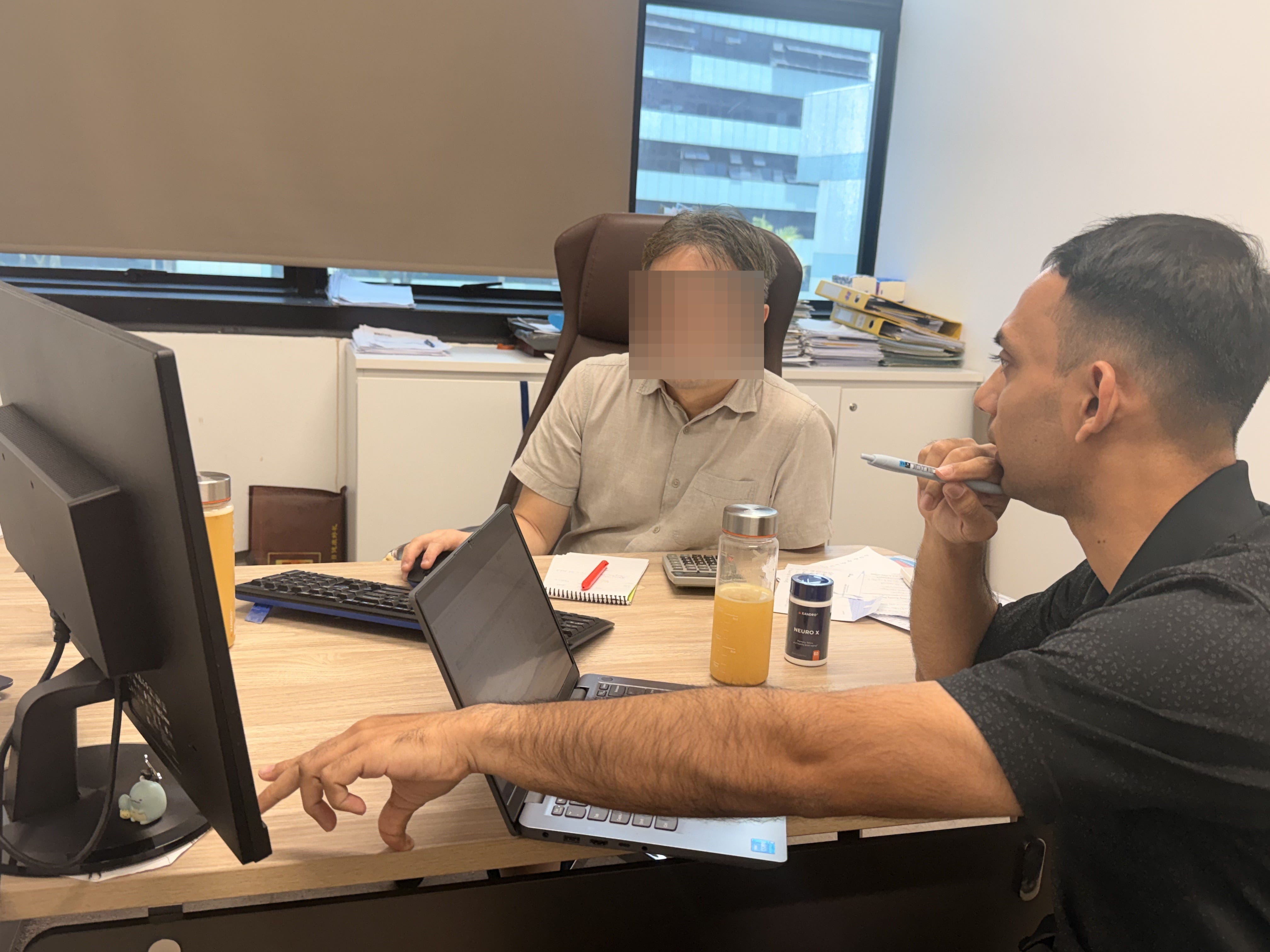
The other leap we are already working through is new markets. Korea. Europe. US. China. In every new market we have explored so far, the bottleneck is not capital. It is people. A recent Korea conversation was instructive. The local team we were working with was supposed to tell us which products would work best there based on their market knowledge. Instead they asked us to tell them. That is useful, because it tells me exactly what skill sets my partners have and don’t have, and where I need to cover the gap myself. But it also means I cannot shortcut the product thinking even in a market where I am hiring local expertise.
I don’t have a crisp plan yet. I have a direction, a filter, and a timeframe.
6. What year three actually looked like
Let me walk through the three years honestly, because that is more useful than abstractions.
Year one ran April 2023 to April 2024. We hit SGD 100,000 a month in less than twelve months. That was the confidence year. We had cash. We could invest without worrying about profit yet. I was building the team, testing channels, finding what resonated. Everything that worked, worked fast.
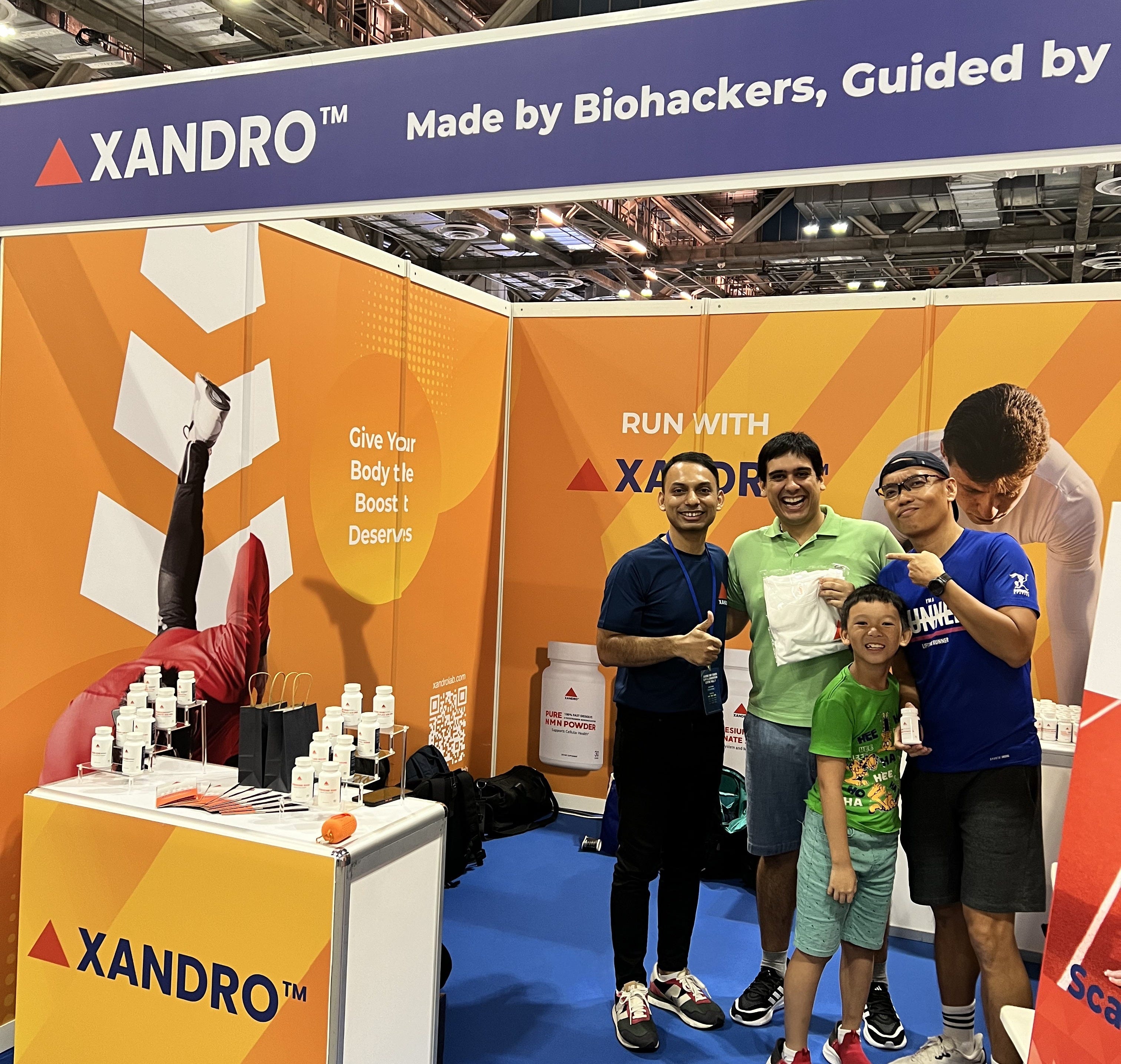
Year two ran April 2024 to April 2025. This was the discipline year. Having hit 100K a month, we had to prove we could survive without burning ourselves out. Marketing spend came down. Channels got selective. TikTok, which was our fastest-growing channel and the only one that could scale 2x and 3x in months instead of quarters, became the focus. Livestreams were a uniquely powerful format for us. Then in late 2024 we developed the propositions for Protocol X and LPC NEURO, and those two products carried us into 2025.
Year three ran April 2025 to April 2026. We built out Protocol X and LPC NEURO as full product lines. In mid 2025 we launched new products that we thought would open the next growth curve. They didn’t. They failed commercially. Not catastrophically, but enough to tell me that the team, the agencies, and the playbook that got us here were not going to get us where I want to go next. We ended the year with revenue intact but with every part of the operation flagged for an upgrade. Production capacity. Marketing maturity. Talent depth. By end of 2025 we had replaced every one of our major agencies with world-class partners. The team has changed materially in the last few months.
Three things I carry into year four.
One. Year three is the honest year. Year one and two let you ride momentum and founder energy. Year three is where the market tells you whether you built something that compounds or something that fades. We are still standing. Standing is not the same as winning.
Two. At this stage, the only viable strategy is to become unreasonable. Reasonable, on current industry benchmarks, means accepting the treadmill. Reasonable means chasing every new channel, every new format, every new creator partnership as if effort alone will beat structural math. It won’t. The brands I watch now are the ones saying no more than yes, concentrating their effort on the one or two things that might actually move the needle for a decade.
Three. I don’t want the SME outcome and I’m not willing to optimise for it. That means taking swings that will either compound or kill us. I am willing to wait. I am willing to put the effort in. I am not willing to settle.
Year four starts now.
Note: I borrowed the word “turf keepers” from a conversation with Dr. Cheryl Kam.
If this resonated or you have thoughts, reach out. Always open to the conversation.
Shan