


👋 Hi, I’m Shan — co-founder and CEO of Xandro Lab, a Singapore-based longevity science brand. I write about building a company, aging well, and the science that sits between the two.
A few weeks ago I was in a meeting with a potential investor. They were sharing their thesis on a doctor-led longevity care startup here in Singapore. Sharp argument: the science is maturing, the demand is there, but the clinical infrastructure to deliver it at any real scale doesn’t exist yet. Whoever builds that layer wins.
Somewhere in that conversation I realized they were describing exactly what I’d been circling around for months.
What struck me more was this: two years ago, this same investor was skeptical of longevity as a category. I asked what changed. He said he’s older now and recognises what he didn’t then. That’s the shift. It’s not just investors. People in their 50s and 60s today are not the same generation that said “whatever happens, happens.” They’re researching, tracking, spending on their health. Post-COVID accelerated it. The demand is real and growing. The infrastructure hasn’t kept up.
That gap is what this post is about.
Today’s reading:
The gap is real, and I see it every week
Someone is already building this
Why doctors, and why now
Where this goes
Where Xandro fits and what I’m watching
1. The gap is real, and I see it every week
The evidence isn’t in market reports. It shows up in my inbox and phone.
I had a customer, 60-plus, busy professional, call me to go through everything he was taking. He wanted to know what to stack, what to avoid. I told him to speak to his doctor. He said: “I did. My cardiologist told me he doesn’t know what this is and I shouldn’t be taking it.”
Two failure modes in one story. The doctor who doesn’t know. And the doctor who doesn’t know but still says no.
I’ve also had a doctor, 40-something, email us directly asking for advice on what to take. A trained clinician going to a supplement company because she had nowhere better to go. That’s a system gap.
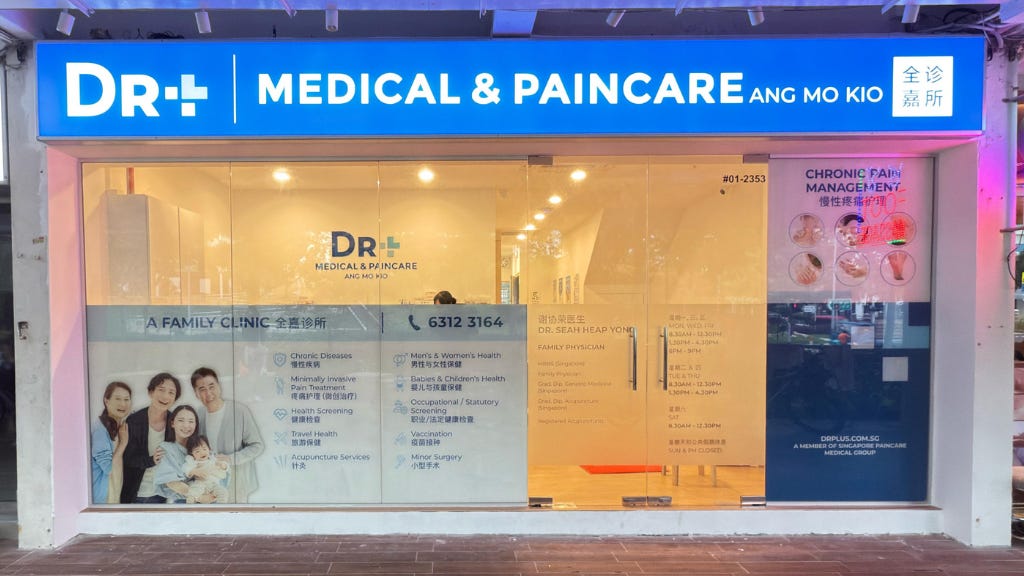
GPs today are trained to treat disease. It’s just what medicine was designed for. Longevity care requires a different orientation entirely: pattern recognition across biomarkers, understanding emerging evidence, knowing what to test and track before something goes wrong. Most GPs aren’t there yet. And the pioneering longevity clinics that do get it charge SGD 40–50K a year. They started the movement. But the movement needs to go a lot wider.

Affordable, doctor-guided, evidence-informed longevity care barely exists in Asia. That’s the missing layer.
2. Someone is already building this
In the US, a few companies have figured out a model.
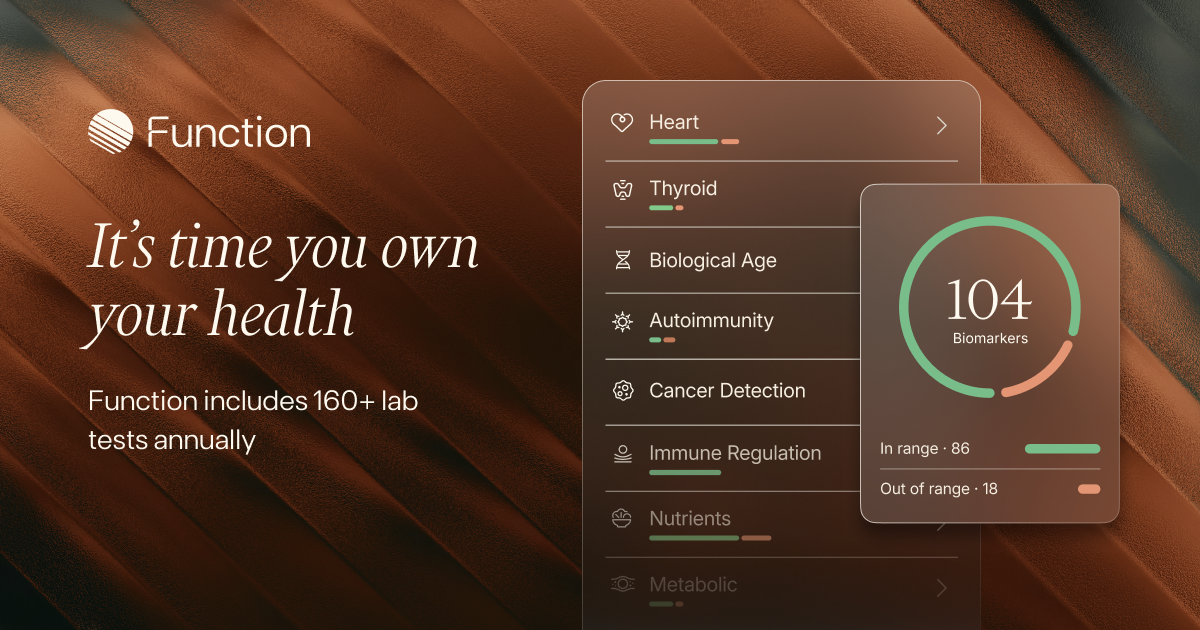
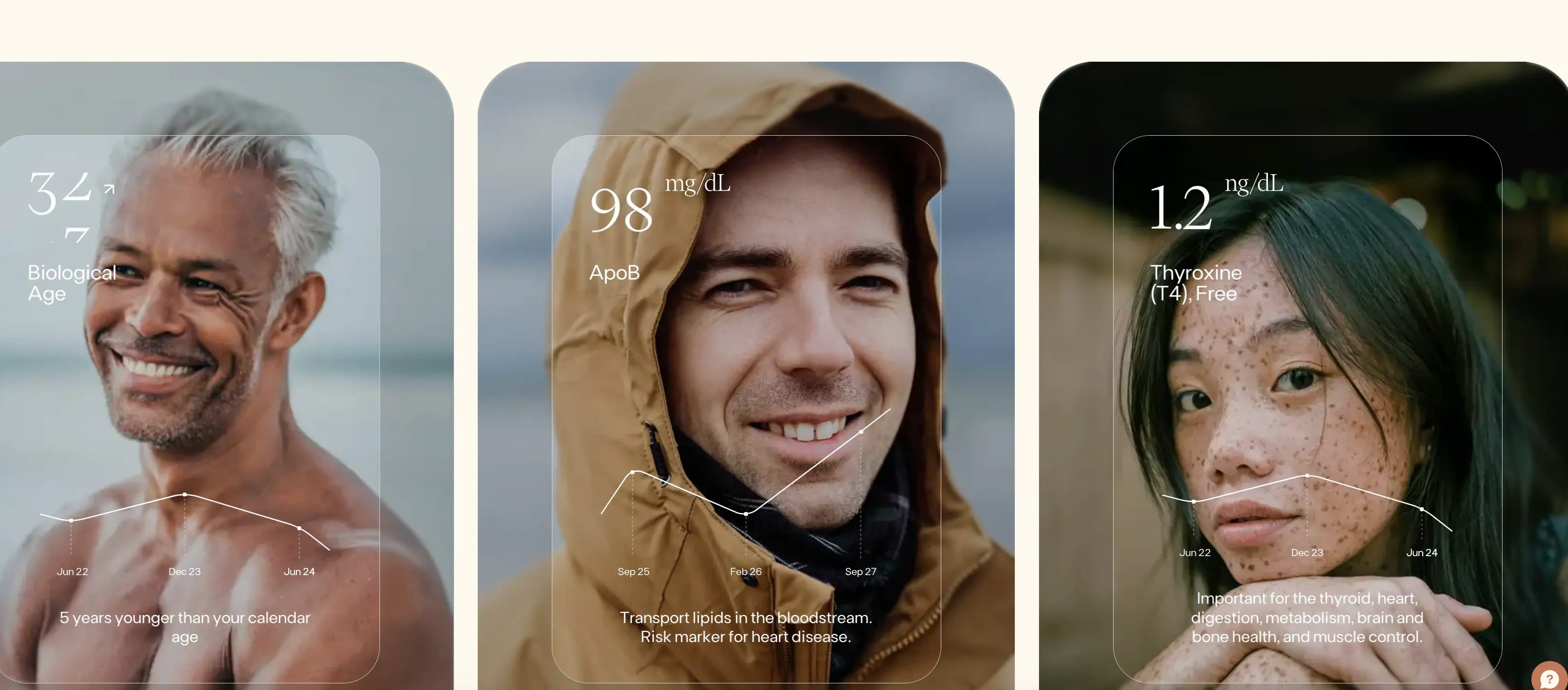
Function Health. Superpower. Mito Health. The approach: high-volume biomarker testing, AI-interpreted results, a physician layer on top. Function Health charges around $365 a year and has raised over $350M. It works because testing is cheap in the US, the market is large, and people like Peter Attia spent years making longevity medicine intellectually serious rather than fringe.
Closer to home, Protocol Health in Singapore is doing comprehensive panels at around SGD 650+ a year. Proof the model is solvable here. The barrier is scale.
India and China have the cost advantage but a different challenge: people aren’t yet in the habit of investing in their health before something goes wrong. Most startups there are targeting HNIs first. Singapore is different. Awareness exists. People are spending. The infrastructure just hasn’t caught up with the demand.
3. Why doctors, and why now
The piece most people in this industry underestimate: a doctor isn’t just a clinician. They’re a trusted intermediary. That trust changes everything about how a recommendation lands.
Simple example. Our magnesium glycinate is called Pure Magnesium Glycinate 500mg. It delivers 100mg of elemental magnesium. Customers regularly panic thinking they’re taking 500mg. If a doctor had recommended the same product and explained the difference in ten seconds, there’s no confusion. There’s compliance. There’s outcome.
That’s a distribution function, not just a clinical one.
The deeper point: most people have no framework for making sense of health information. There’s too much of it, it contradicts itself, nobody knows who to trust. A longevity-trained doctor becomes the person who filters, contextualizes, and recommends. That unlocks protocols that sit in the “interesting but not sure” drawer for years.
But here’s what makes this moment different from five years ago: you can’t manage what you don’t measure. The biomarker layer changes everything. When a patient walks in with twelve months of blood test data, wearable trends, and a clear baseline, the doctor has something real to work with. They’re not guessing. They’re pattern matching. That’s a fundamentally different clinical conversation.
AI makes this more powerful still. The knowledge base on Claude, GPT, Gemini is strong enough now that a doctor who uses these tools well is a significantly more capable practitioner than their training alone makes them. Clinical judgment is theirs. Research synthesis, pattern recognition across thousands of studies, cross-referencing emerging evidence in real time — that’s where AI changes the equation.
The model itself is simple. You get a blood test every six to twelve months. Results feed into a system. A doctor reviews when something shifts. If there’s a change worth discussing, they reach out. You don’t wait until you’re sick. You maintain a baseline and adjust before things go wrong. Pull instead of push. Proactive instead of reactive.
The 24/7 wearable question is still being worked out. Life isn’t consistent. One bad night, one stressful week can move numbers significantly. Point-in-time testing plus trend analysis is probably more useful than constant noise. The industry is figuring this out.
4. Where this goes
Longevity medicine won’t stay generic. It’ll fork the way most medical fields do.
Women's hormonal health and menopause is the most underserved area right now. Conventional medicine's answer has been inadequate. Longevity medicine takes a different approach: biomarker-guided hormone management, properly administered HRT, strength training protocols that account for where a woman actually is hormonally. These aren't experimental ideas. They exist. They're just not accessible to most people yet. And as the science matures, more solutions will come.
Next, muscle and active aging matters more than most realize. Not about being athletic. Muscle mass is one of the strongest predictors of how you function in your 70s and 80s: staying mobile, staying independent. Getting there requires interventions that start well before 70.
Cognitive health is where I hear the most anxiety from our customers. Memory, focus, response speed. It comes up constantly. Pills alone won’t solve it. Memory training and lifestyle changes alongside supplementation. We haven’t moved into that territory at Xandro yet, but the need is clearly there.
The best version of all of this won’t just be medicine. It’ll be a mix of medicine, nutrition, and real lifestyle changes, tailored to where someone actually is. That’s harder to deliver than a prescription. But it’s what actually moves outcomes.
This also matters beyond individual patients. Supplements and longevity protocols live in a credibility gray zone right now. Some of that is deserved. The mechanism that pulls things from “interesting claim” to “validated intervention” is institutional scrutiny. Doctor-led care forces documentation, outcome tracking, peer comparison. That’s how a field grows up.
GLP-1s are the proof of concept. A drug class that started on the edges of metabolic medicine is now global, mainstream, rigorously studied. Peptides will follow. More compounds will come. The question is whether they get validated properly or stay in “biohacker on Twitter” territory indefinitely.
Doctor-led care is what systematic looks like.
5. Where Xandro fits and what I’m watching
We started as a supplement company. That’s not changing.
But we’ve been looking at longevity clinics. GP training and enablement specifically interests me because GPs are the most accessible touchpoint for the mass market. You don’t scale doctor-led longevity care by building private clinics. You scale it by bringing existing doctors up to speed. Alongside that, distributing the right products through clinical networks, working with specialists, and eventually the pharmaceutical industry as this field matures.
In Singapore, operating in one narrow lane isn’t enough. The market is small. You need depth across the full stack to build something durable. That’s not ambition for its own sake. It’s just the reality here.
We’re at the supplement end, moving deliberately. But the direction is clear.
As for what would tell me this is moving faster than expected: a Singapore hospital launching a real longevity program, not a wellness screening; a GP curriculum that includes metabolic and longevity medicine; testing costs dropping below SGD 400 for a comprehensive panel; a supplement or longevity company in Asia formally partnering with a medical practice.
None of these have happened at scale yet. But they will. And when they do, the missing layer won’t be missing anymore.
See you next Sunday.
Shan