


Hi, I’m Shan. I run Xandro Lab, a longevity science brand in Singapore. I started writing these Sunday notes when I closed my first business. I didn’t want my Xandro journey, my second stint at building, to go un-journalled. I share about business, operator notes, marketing and my own personal stories here.

For the past one year, you will see me focusing on topics I come across as a business operator in longevity space. This one is slightly more personal, and something that has changed quite drastically for me in the last few months. My relationship with sugar, or more accurately, carbs.
I have been making active changes to my diet since around 2018. It started with reducing oil, spices, sugar and generally trying to keep the food as clean as possible. Over the years it became stricter. Then sometime around 2020/21 I started intermittent fasting, which became possibly the biggest intervention I made to my eating habits.
All of this worked very well for me. I have been in possibly my best shape in the last five years, I felt good and the diet was also quite easy to maintain once I got used to it.
Recntly, I started running seriously, and a lot of these rules changed.
Today’s read
How sugar became the enemy
Then I started running
Carbs are fuel
Carbs vs protein
Quitting intermittent fasting
Let’s get started.
1. How sugar became the enemy
I quit sugar almost seven or eight years ago. Tea, coffee, drinks - I ate and drank everything without sugar. I remember that my bottle of sugar would last more than a year because I never used it.
Over time “sugar control” became easy. I started preferring the taste without sugar. Even now, if something is too sweet, my mouth and brain feels uneasy. I almost immediately need water to remove that sweetness from my mouth. I sometimes like the idea of having an ice cream more than actually eating one. Once I eat it, the sweetness prevents another ice cream for a few months. Even the flavours I like are generally sea salt, black sesame and similar ones which are slightly less sweet.
It wasn’t only added sugar. Carbs also became something I actively reduced. Rice almost disappeared from my diet for a period. I moved to homemade bread (rotis) and eventually reduced that too. There were long periods where meals were largely vegetables and protein, and whatever carbs came along with those foods I considered enough. I still eat rice now, especially living in Singapore, but historically it has been a very small part of my plate.
Then came intermittent fasting.
I started around 2021 and have followed it ever since. For me, IF was skipping breakfast. I would come into office on an empty stomach and the first three hours are my most productive time of the day. Very sharp, very focused and ready to get things moving. Then I would have lunch and you could almost feel the body slowing down.
If someone asked me for one productivity and health intervention, intermittent fasting would be the top on that list. It became such a normal part of my life that I didn’t really think about it anymore.
What I did realise recently is that somewhere along, carbs and sugary foods became an “enemy” for me. Something I didn’t really need and was better off avoiding.
2. Then I started running
I have been running for a long time, but it was mostly recreational. Once or twice a week, sometimes three times. I would do around 15 to 20 kilometres a week. That does demand something from the body, but nothing close to what I am doing now.
This May, I finally decided to do something on my checklist. Run a marathon. I wasn’t really sure how to start, so I took a smaller jump first and registered for a half marathon with only 5-6 weeks to prepare. Fortunately I found a coach, and suddenly my running volume went from somewhere around 15-20K to 40+ kilometres a week.

Now I am consistently above 50K. Some weeks are getting close to 60, and I expect this to increase further as I get closer to my first marathon in November.
My body reacted quite quickly to this change. After some of the harder sessions I would have headaches. I would finish training feeling like a hungry beast who needed food right away. There was more soreness, more body pain and simply much more recovery required between sessions.
And I realised that the way I had been eating wasn’t going to work.
So I changed it.
Right now, my priority is actually to eat more. I don’t want to take the risk of under-eating while my body is trying to adapt to a training volume it has never experienced before. I am also afraid of injuries. I want the muscles and the rest of the body to have enough nutrition to recover from the stress I am putting it through.
Maybe I am eating slightly more than I need. That’s okay for now. Once my body gets used to these volumes, I can start optimising again. Right now, the objective is quite simple. Get through the training, stay healthy and finish 42 kilometres.
3. Carbs are fuel
I have been calling all of this sugar, but technically its carbohydrates. Sugar is one form of carbohydrate, but carbs also include starches and other forms from bread, rice, potatoes and many other foods.
What has changed for me is less about the definition and more about how I look at them.
For years, I primarily looked at carbs as calories that I didn’t particularly need. Now I look at them as fuel.
When we eat carbohydrates, the body can use glucose for energy and store carbohydrate as glycogen in the muscles and liver. When we exercise for longer and harder, we use these stores. Suddenly this becomes quite relevant when you are running 90 minutes or longer.
A 2025 review in Sports Medicine that I came across, while researching, looked at nutrition for post-exercise recovery. Carbohydrates came out as one of the strongest-supported recovery interventions, together with protein and fluids/electrolytes. When recovery needs to happen quickly, restoring glycogen becomes particularly important.
This also explains why endurance athletes spend so much time talking about gels, sports drinks, bananas, dates and different combinations of glucose and fructose. For longer endurance exercise, sports nutrition guidelines commonly talk about consuming carbohydrates during the activity itself, and the amount increases as the duration increases.
I am still figuring out what works for me.
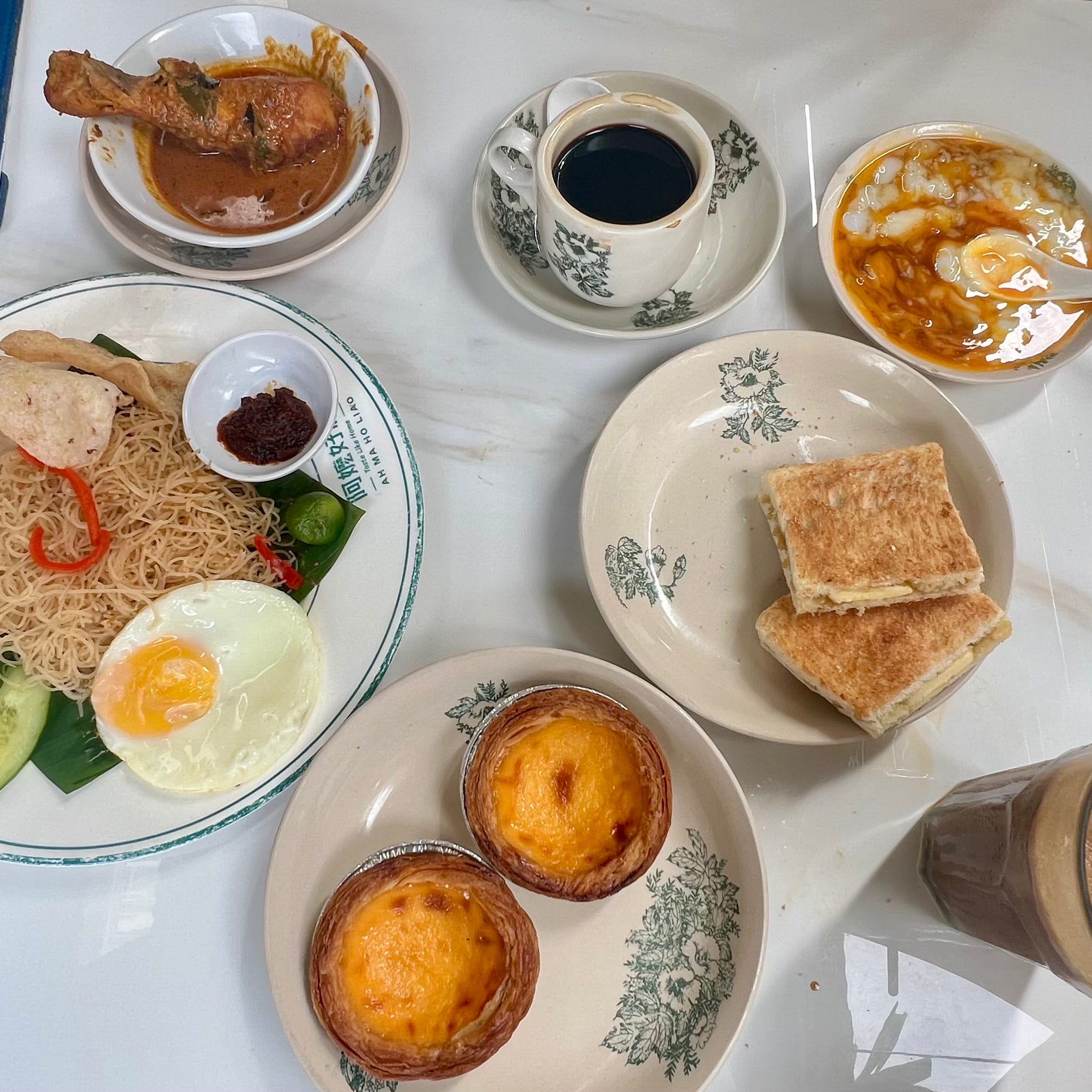
After morning training, I can now happily have kaya butter toast, two eggs and kopi O. Previously the kopi would always be kopi O kosong. At home, I can have 3-4 eggs, bread, butter and fruits. Lunch could be chicken rice with more eggs or another protein source. Bread and rice have both gone up considerably.
I went from having a few bananas a week to 3-4 a day because they are convenient. I have stopped them for the moment because I suspect they are giving me body aches at night. I don’t know yet, so I am testing it by removing them for a few weeks and seeing what happens.
Pizza is another funny one. Earlier I would feel bad after eating pizza because I would immediately think about the carbs and calories. Now my reaction is almost, okay, there are carbs here, I can use this.
Obviously this doesn’t suddenly make pizza a health food. But my relationship with the food has changed. I don’t look at carbs with the same guilt anymore because I am actually asking my body to use them.
4. Carbs vs protein
Protein has always been easier for me to understand. If you train, you need protein. It helps maintain and build muscle and supports recovery. I track my protein intake and continue to make sure I am eating enough.
What I had thought much less about was replacing the fuel used during training.
This is something endurance training has made much more obvious. Recovery is not only about repairing muscle. If a long or hard session has used a meaningful amount of glycogen, that fuel also needs to be restored, particularly when another training session is coming soon.
The Sports Medicine review I mentioned earlier was interesting because it puts carbohydrates, protein and hydration/electrolytes all among the nutritional strategies with strong evidence for recovery. The Instagram post through which I originally found the paper went even further and called carbohydrates the first recovery priority and protein second.
The way I understand it now is simpler. Protein helps with repair. Carbohydrates help refuel. For the kind of training I am currently doing, I need both.
This sounds extremely obvious once you write it down. But it wasn’t how I thought about food for many years. Protein was useful. Carbs were something to control. That equation has changed.
5. Quitting intermittent fasting
Possibly the biggest change I have made is stopping intermittent fasting after almost six years.
I like intermittent fasting. It has been one of the best interventions I have personally made, particularly because of how I felt during those fasted mornings. But right now my objective has changed.

Almost all my training happens in the morning. I used to start around 7:30 am, but I am moving it earlier because it becomes too hot later. For longer runs I have to start even earlier.
Morning is the obvious training window for me. Once training became longer and harder, maintaining the fasting window became less important than proper fuelling and recovery.
Training at night is not something I want to do. My work days can be quite hectic and by evening I am mentally exhausted. More importantly, hard evening training affects sleep, and sleep is as important for recovery.
This is my first marathon training cycle. I don’t know yet exactly how much food I need at 50 or 60 kilometre weeks, and I don’t know how my body will respond when the volume goes higher. I would rather make the mistake of eating slightly more right now than continuously under-fuel while asking the body to do something it has never done before.
After the marathon, I will probably start experimenting again. Maybe I reduce the eating window. Maybe intermittent fasting comes back on easier days or when the running volume comes down. I genuinely don’t know yet.
What I have realised through this is that health interventions probably need to change when life changes. Something can work extremely well for six years and still not be the right thing for what you are doing today.
For now, I am training more than I ever have, eating more than I have in years, and actively looking for carbs that I spent a long time trying to remove from my diet.
And I can finally eat bread in peace again.
Closing notes
Carbs and sugar are not talked much in the longevity space. Protein takes all the lime light. We have got strength training and protein afterwards. It is assumed that people eat enough carbs daily. There has been some attention to fibres but that’s low.
So when I looked at my past few weeks eating habit, this seemed like a very good story to share. In fact, the first few days - I was so skeptical of what I was doing. I even told myself - you are eating like this for a few days, you will get back to IF soon. But no, its not easy. Fuelling is important and carbs cannot be ignored.
Longevity and endurance are teaching different food habits. Or are they? Let me know your thoughts.
Until next Sunday, cheers!
Shan