


👋 Hola! Welcome to Out of Singapore. I’m Shan — I run Xandro Lab, a longevity science brand based in Singapore. Every Sunday I write about what I’m learning at the intersection of aging, performance, and building a health business from scratch. This week’s topic came out of a meeting.
Last week I sat across from the CEO of one of Europe’s largest krill oil companies. Sharp guy. Decades of business behind him. Somewhere in the conversation, we discussed sleep and he mentioned that getting 7 hours is a luxury. He wakes at 5 or 6 a.m., before the alarm goes off. His body just decides it’s done.
Intrigued, I sent him few questions for this post. His response, lightly edited and kept anonymous at his request:
“I sleep 5 to 7 hours during the week. I get off to sleep easily and quickly. I sleep deeply for 4 to 5 hours, then wake and go back to sleep lightly. Then my mind starts being active and thinks of the work schedule and challenges I’m facing. I also travel about 150 days a year across different time zones, Asia to Europe. I see the stress as positive energy. I love my job. I have accepted this as somewhat normal but would like to put more focus on my longer term health.”
He doesn’t know it, but he’s describing the textbook aging sleep pattern with clinical accuracy. And I think about my parents (65 and 75), both sleeping 4 to 5 hours most nights, both reporting they sleep “well.” They’re not wrong. But they’re also not sleeping the way they used to.
This post is the science behind that shift. Not what to do about it, just what’s actually happening, decade by decade, and why.
Today’s reading:
What Sleep Actually Is (And Why the Stages Matter)
The Numbers: What Changes, When, and By How Much
The NAD+ Question: An Emerging Connection
The Parenthood Detour
Nocturia: The Most Underrated Disruptor
Young Sleep vs. Old Sleep
A Few Things That Stand Out to Me

#1 What Sleep Actually Is (And Why the Stages Matter)
Sleep isn’t one thing. It cycles through distinct stages: NREM stages 1 and 2 (light sleep), N3 or slow-wave sleep (deep sleep), and REM. A healthy adult cycles through these roughly every 90 minutes across the night.
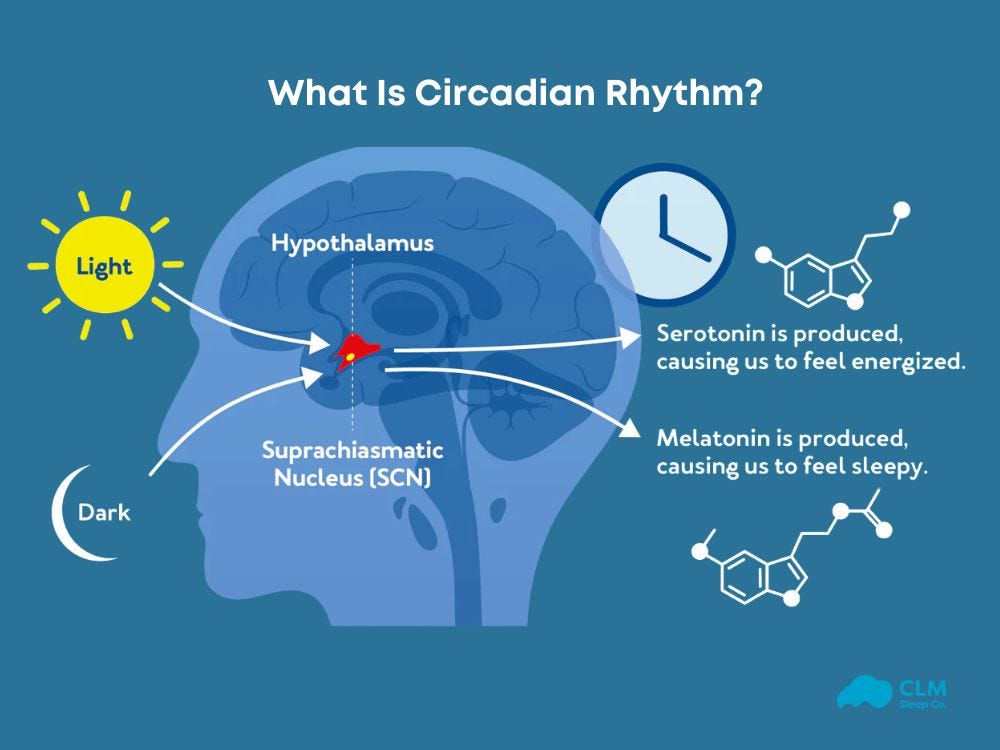
Deep sleep is where serious physical repair happens — growth hormone release, tissue restoration, glymphatic clearance of metabolic waste from the brain. REM is where emotional memory is processed and cognitive patterns consolidate. Both decline with age. Understanding the stages matters because when people say their sleep has “changed,” what’s almost always happening underneath is a shift in this architecture. The hours may look roughly similar on paper, but the structure inside those hours has fundamentally changed.

#2 What Changes, When, and How Much
The Foundational Data
The most-cited reference in sleep science is a meta-analysis of 65 studies covering 3,577 healthy subjects across the lifespan, published in the journal Sleep by Ohayon and colleagues. It found:
Total sleep time decreases at roughly 10 minutes per decade in adults — 8 minutes per decade in men, 10 in women.
Deep slow-wave sleep decreases at approximately 2% per decade up to age 60, then plateaus.
REM sleep declines at about 0.6% per decade from age 19 to 75.
Wake after sleep onset (WASO) — time spent awake after first falling asleep — increases by approximately 10 minutes per decade from age 30 to 60.
Most of these changes stabilise after age 60 in healthy adults.
One exception: sleep efficiency (the proportion of time in bed actually asleep) continues to decline slowly even after 60, unlike most other parameters.
The Trough: Ages 46 to 55
This is the finding that surprised me most when I went deep into the data.
A Scientific Reports study from Duke-NUS used objective Fitbit data from 23,680 users across 553,559 nights in Singapore, Hong Kong, South Korea, Australia, and New Zealand. On weekdays, sleep duration showed a clear U-shaped curve across the lifespan, with a trough between ages 46 and 55. Not in your 70s. Right in the middle of peak career years.
The people most responsible for major decisions in business are systematically sleeping the least of their lives. They adapted to the decline gradually. They don’t know what they’ve lost because they lost it slowly.
On weekends, the trend was more linear — sleep duration decreasing steadily with age. Researchers suggest reflects a biological decline in sleep capacity, not just occupational pressure.
The Singapore Reality
The same Fitbit dataset carries numbers worth sitting with. On weekdays, only 27% of Singapore users were getting 7 or more hours — compared to 61% in Australia and 66% in New Zealand. East Asian users slept an average of 32 to 43 minutes less than Oceanians on weekdays, driven primarily by later bedtimes rather than earlier wake times.
This gap persisted even on weekends. The researchers note it could reflect cultural attitudes toward sleep — in Asian professional cultures, long hours signal commitment in a way they don’t in the West. We have built a culture that is very good at adapting to sleep loss.
What Oura’s Real-World Data Shows
In July 2025, Oura published analysis of aggregated, de-identified data from over 25,000 members, led by scientists Iman Alikhani, Mari Karsikas, and Max de Zambotti. It’s one of the largest continuous wearable sleep datasets available and it puts concrete numbers on the decline:
Total sleep dropped from an average of 7h 21min in the 20–25 age group to 6h 43min by ages 80–85.
Deep sleep declined by 50% from the youngest to the oldest group — the single most striking number in the dataset.
REM sleep began declining after age 35, with smaller but consistent decreases over time.
Light sleep increased substantially with age, eventually comprising 70 to 75% of total sleep in the oldest group — well above the healthy target of 45 to 55%.
Wake after sleep onset nearly tripled: under 40 minutes in the youngest group, over 1 hour 20 minutes in the oldest.
Women slept an average of 16 minutes longer than men across all age groups.
Sleep timing shifted earlier with age consistently — earlier bedtimes, earlier wake times — the phase advance that the academic literature also describes.
Users in their 30s and 40s spent the least time in bed of any age cohort. Younger and older users both spent more time in bed, but for entirely different reasons — younger because of social and sleep-phase delays, older because the gap between time in bed and time actually sleeping widens progressively with age.
The Hormonal Layer
Published in Sleep Medicine Clinics in 2018, a Penn Medicine review documents the hormonal cascade driving much of this:
Growth hormone secretion declines exponentially from young adulthood to middle age, then more slowly. Since deep sleep and GH secretion are tightly coupled — each promoting the other — their parallel decline is probably not coincidental.
Cortisol rises at night with age as circadian amplitude decreases. Elevated nocturnal cortisol is associated with both reduced deep sleep and more frequent awakenings.
Melatonin secretion declines significantly with age. The nocturnal peak in older adults is substantially lower than in young adults, which weakens the circadian signal for sleep onset and contributes to the phase advance — the biological tendency to fall asleep earlier and wake earlier — that characterises aging sleep.
Testosterone decreases progressively in men after age 30, and loss of its normal diurnal pattern correlates with increased sleep fragmentation. In women, the menopause transition drops estrogen and progesterone levels, disrupting sleep initiation and maintenance while increasing the risk of sleep-disordered breathing.
Decade by Decade
Your 20s. Sleep architecture is at its best. High deep sleep early in the night, substantial REM later. Circadian rhythm is strong. Recovery from disruption is fast.
Your 30s and early 40s. Deep sleep begins declining. If you have young children, you layer external fragmentation on top of the biological trend. REM percentage starts dropping after 35, per the Oura dataset — earlier than most people assume.
Your 46 to 55 (the trough). Total sleep hits its floor. Work pressure, travel, career peak, and possibly young children or ageing parents — all colliding with a body that is biologically less able to sustain deep sleep. Growth hormone secretion is a fraction of what it was at 30. This is exactly where the CEO in my intro sits.
Your 60s. Most objective parameters plateau — but at a reduced baseline. Less total sleep, less deep sleep, less REM, more awakenings. Nocturia becomes a major disruptor. The phase advance is significant: waking at 5 a.m. or earlier is biologically normal, not pathology.
Your 70s and beyond. Normal total sleep may fall to 5 to 6 hours, with significant fragmentation. A 70-year-old spending 8 hours in bed may be getting 5 hours of genuine sleep, with the rest spent in light stages or brief wakefulness they barely register.
#3 The NAD+ Question: An Emerging Connection
Here’s where I want to be precise, because this space is easy to overstate.
NAD+ is a coenzyme involved in hundreds of biological processes — energy metabolism, DNA repair, sirtuin activation, mitochondrial function. It declines with age, dropping roughly 50% between your 20s and 50s. Disrupted sleep-wake cycles and circadian rhythm degradation are also features of aging. Whether NAD+ is causing the sleep changes, whether both are downstream consequences of the same aging processes, or whether they form a feedback loop — that is still an open scientific question.
What the published evidence shows is that NAD+ and the molecular circadian clock are connected. A study published in Molecular Cell by a team at Northwestern University found that NAD+ levels influence the behaviour of clock proteins — specifically a repressor called PER2 that regulates the circadian cycle. In older mice where NAD+ had declined, circadian oscillations were dampened. When NAD+ precursors were given, some of those oscillations were restored. That’s a mouse study. The human data is less direct.
The honest framing is this: NAD+ is likely one part of a complex picture, not a single explanation for why sleep degrades with age. The circadian clock, melatonin, cortisol, growth hormone, testosterone, estrogen, sleep homeostasis — all of these are moving parts. NAD+ may sit at an interesting intersection of several of them, and the research is genuinely worth watching.
#4 The Parenthood Detour
Before you even reach the natural age-related decline, a lot of people get hit first by something else: having a child.
A study published in the journal Sleep, tracking nearly 4,700 parents from 2008 to 2015, found that after the birth of the first child and up to 6 years after, mothers and fathers sleep duration and satisfaction do not fully recover to pre-pregnancy levels.
Six years. Not six months.
Sleep deprivation peaked in the first three months. Between the third trimester of pregnancy and three months postpartum, sleep duration was 87 minutes shorter in women and 27 minutes shorter in men. Even four to six years later, mothers were sleeping around 22 minutes less.
What’s happening physiologically is fragmentation. Newborns have no mature circadian rhythm. Their sleep is scattered across 24 hours. Every awakening forces their parents out of a sleep cycle, usually from a lighter stage — which means the parent never completes the deep, uninterrupted stretches needed for hormonal restoration and glymphatic clearance.
The subtler effect is what happens to the nervous system. Even after children sleep through the night, the vigilance doesn’t fully switch off. Getting back to the uninhibited deep sleep of your late 20s becomes its own challenge, separate from the child entirely.
For a 35-year-old new parent, the trajectory can look like this: biological sleep quality beginning its natural decline, layered with 2 to 6 years of externally fragmented sleep, arriving in their 40s at the documented trough with a cumulative deficit and a reshaped baseline.
#5 Nocturia: The Most Underrated Disruptor
This is the one nobody talks about at dinner.
A study in Sleep Medicine surveyed 1,424 people aged 55 to 84 and found that nocturia — waking at night to urinate — was cited as a cause of disrupted sleep every night or almost every night by 53% of the sample. More than four times the rate of the next most common cause, which was pain at 12%. In multivariate models, nocturia was an independent predictor of both insomnia (75% increased risk) and poor sleep quality (71% increased risk).
The prevalence scales sharply with age. Research from Harvard’s Division of Sleep and Circadian Disorders found that while fewer than 5% of young adults report nocturia symptoms, about half of those in their 60s are affected, rising to nearly 80% of the oldest age groups.
The causes are multiple:
Reduced bladder capacity
Decreased antidiuretic hormone secretion at night
Prostate enlargement in men
Pelvic floor changes in women
But the underlying sleep mechanism is equally important. Because older adults are spending more time in light sleep, they are more easily woken by a filling bladder — whereas a 25-year-old in deep slow-wave sleep might not register the same signal until morning. The nocturia and the sleep fragmentation are mutually reinforcing: lighter sleep produces more awakenings, those awakenings trigger voiding, and each trip to the bathroom interrupts the architecture that makes re-entering deep sleep possible.
#6 Young Sleep vs. Old Sleep
A healthy 25-year-old sleeping 8 hours will spend a substantial portion of the early night in N3 — deep, restorative, growth hormone releasing. They’ll cycle into REM as the night progresses. Minimal arousals. Strong circadian drive. Fast recovery if disrupted.
A healthy 65-year-old spending 7 hours in bed tells a different story. More time in lighter N1 and N2 sleep. More awakenings, more time awake after sleep onset, less deep sleep, reduced REM. Melatonin response to darkness is blunted. The circadian phase has advanced approximately one hour relative to young adults — waking at 5 a.m. or earlier is biologically expected.
The Penn Medicine review makes a careful point here: the decline doesn’t mean older adults need less sleep. It means their capacity for it has changed. Healthy older adults who reported no sleep problems were measured by polysomnography and found to have objectively impaired sleep — 33% of women and 16% of men. They felt fine. The machinery was running differently.
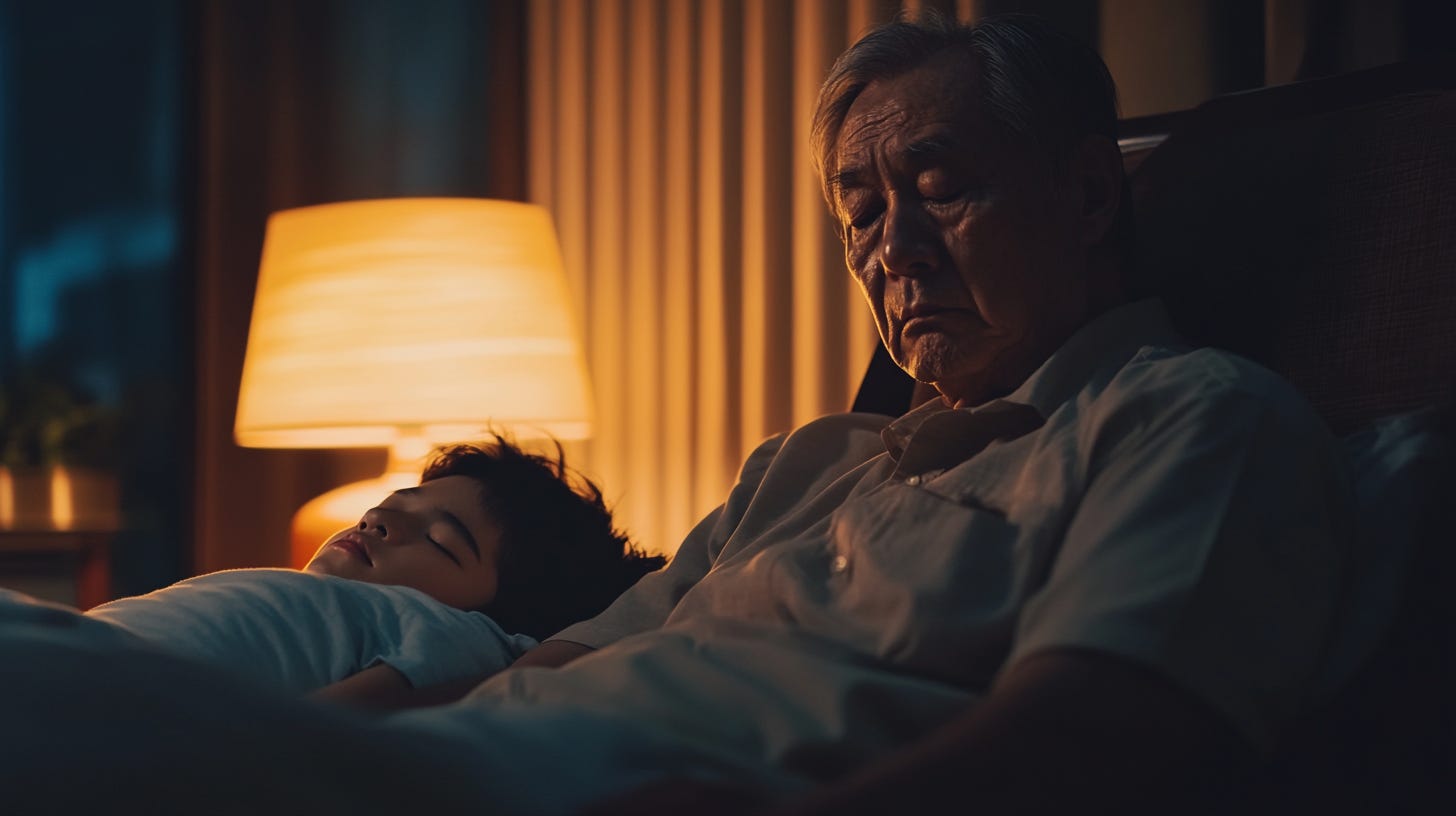
That gap between subjective experience and objective measurement is important. It means the decline is happening regardless of whether you feel it acutely.
A Few Things That Stand Out to Me
The CEO in my intro is not failing at sleep hygiene. He’s navigating 150 days of trans-meridian travel a year, crossing 8-hour time zone differences between Singapore and Europe, on a biological system that becomes progressively worse at adjusting to phase shifts as it ages. He’s running a major business on a sleep structure that any sleep scientist would immediately recognise as mid-life biological norm, layered with chronic circadian disruption.
Contrast that with Alastair Hunt, who runs The Whole Health Practice. He sent back the most reassuring set of answers: 7 to 7.5 hours, wakes naturally, feels refreshed. He strength trains regularly and notes he consistently sleeps best on training days — a finding the research on slow-wave sleep and exercise supports directly. He manages occasional nocturia from training hydration, and ruminative thinking when it arrives, with a deliberate system. He attributes his current sleep quality partly to lower stress than in earlier career periods. He’s not immune to the biology. But he’s made choices that slow its expression.
The Singapore numbers: 27% of users getting 7 or more hours on weekdays. The gap between Singapore and Australia is more than half an hour, driven by later bedtimes. We go to bed late, wake at the same time as everyone else, and call the gap between the two “enough” because there’s no other option in the schedule.
None of this is fatalistic. Understanding the mechanism is the first step to thinking clearly about the problem.
I want to hear from you.
Reply to this email and tell me about your sleep. I’m genuinely curious and I’m building a picture of what sleep actually looks like across different life stages here in Singapore and beyond.
Share whatever feels relevant: how many hours you’re getting, whether you wake at night, what you think is driving it. And a little context helps — your age, whether you have young kids, how demanding your work schedule is, how much you travel. You don’t need to write an essay. Even a few lines gives me something real to work with.
Out of Singapore goes out (almost) every Sunday. If you found this useful, share it with someone who’s been waking at 4 a.m. and calling it fine.
For more on the Xandro research program and our ongoing Singapore NAD+ study, start here.