


Hi, I’m Shan. I run Xandro Lab, a longevity science brand in Singapore. Every Sunday I write these notes, part building diary, part thinking out loud.
We are currently moving our entire webstore from BigCommerce to Shopify. BigCommerce can continue serving us for years, but most of the e-commerce ecosystem is now built on Shopify. More tools, integrations, analytics and AI product have deeper integration with Shopify, and staying where we are increasingly means building everything ourselves.
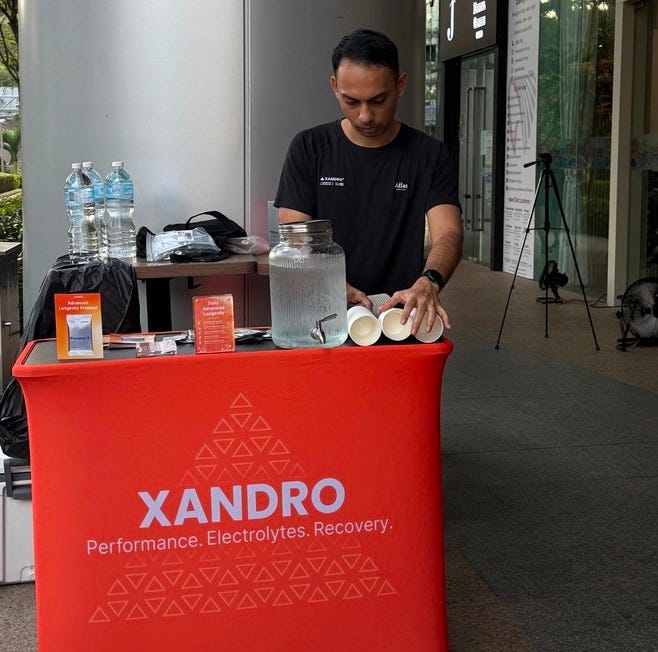
This is not the only part that we are rebuilding. In three years, the products have evolved, the prices have evolved, the website has been rebuilt several times, the social media looks completely different, and the people building the company have changed too. Our approach to marketing, manufacturing, hiring and market expansion has gone through several versions. Sometimes I feel that we have finally put one part of the company in place, only to discover that another part needs to be pulled apart again. I used to find this frustrating. Now I am beginning to think that rebuilding the company over and over again may be the actual work.
Today’s Reading
Before It Breaks
Expiring Playbooks
When Growth Breaks
Rebuilding Teams
Learning to be a “Boss”
1. Before It Breaks
BigCommerce works fine. It takes orders, collects payments and runs the website. Payments are actually one of the better parts of the platform. You can customise all parts of the store. If all we wanted was a functioning online store, we could probably remain there for years.
The problem starts when we try to do anything beyond basics. Our WhatsApp marketing platform lacks revenue attribution on BigCommerce. We can see that messages were sent, but we cannot clearly see how much revenue came from them. The deeper Shopify integration already does this.
The same thing happens with customer service. Gorgias can bring the customer conversation and the order into one place on Shopify. The support team can edit an order or issue a refund without moving between dashboards. On BigCommerce, much of that remains manual. Judge.me, which we used for reviews, stopped supporting BigCommerce earlier this year. Almost every time we look at a new tool, Shopify is supported first and BigCommerce is either supported at a basic level or missing altogether.
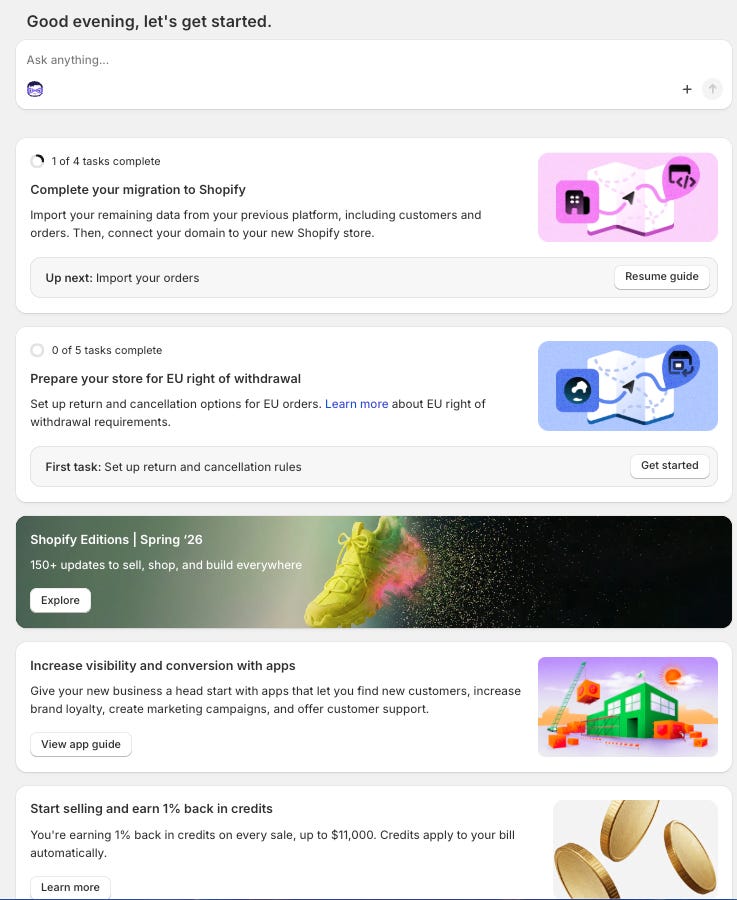
Our developer is very good, so we kept finding ways around these gaps. We built custom integrations and added features ourselves. That worked for a long time. It also meant that every improvement became a small technology project, followed by maintenance whenever one of the systems changed. We were spending time rebuilding things that already existed elsewhere.
AI made the gap more obvious. We want to use AI to help customers understand our products, compare formulas and receive useful science-backed answers while shopping. The tools are improving quickly, but most of the companies building them are starting with Shopify. On BigCommerce, we would have to build much more of that layer ourselves.
I know Shopify will create its own problems. Its payments setup can be frustrating, and customers in some markets may face currency conversion charges. We will discover more issues after the migration. Still, the upside looks larger. We should gain better integrations, better customer information and much more room to test what is happening in e-commerce now.
This is the strange part of rebuilding. BigCommerce has not failed. We are leaving because it is becoming harder to evolve on it.
2. Expiring Playbooks
Our marketing has gone through the same cycle. Something starts working, we become confident, and then it changes.
TikTok paid ads became so inefficient that we stopped them for the last 3 months. TikTok Shop itself has also been inconsistent. A large part of the sales depends on livestreams, and even those results have been patchy from one month to another. Shopee has been different. It continues to deliver, so we continue to spend there.
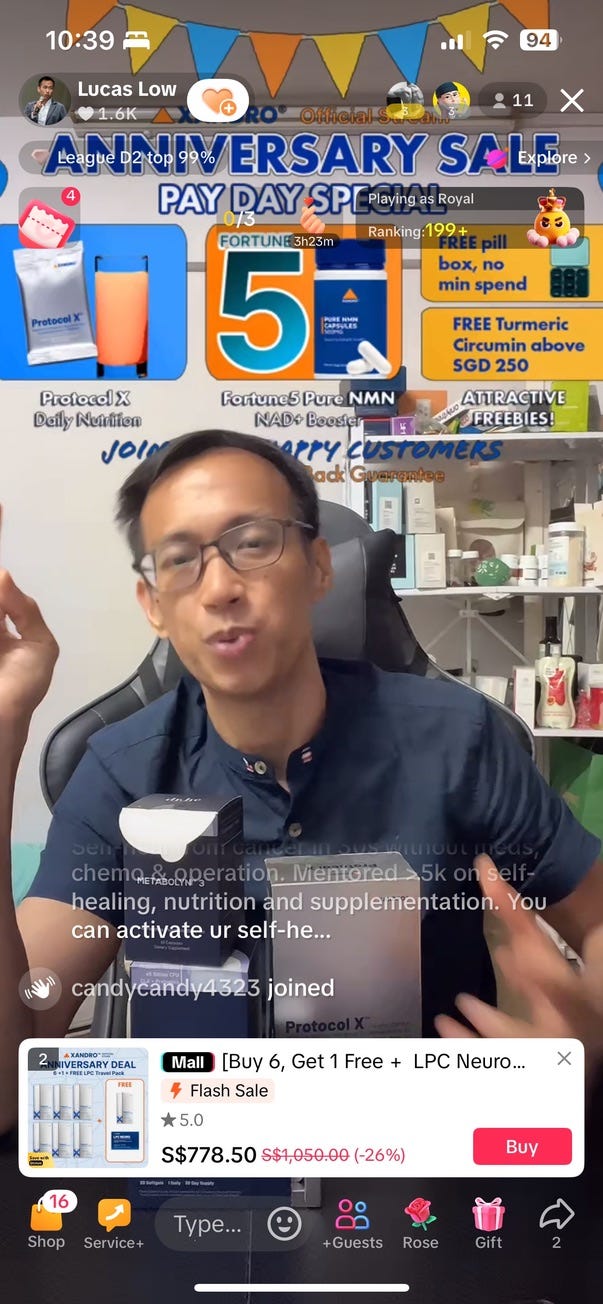
This has made us far more strict about where money goes. We cut campaigns quickly, change creatives often and keep moving money away from channels that are not working. We still have a lot more to do in content production, both for organic reach and paid campaigns (that is another major area of focus right now).
Among markets, Hong Kong has been so confusing. We entered in 2025 and it started well. The early growth made us feel that the market would continue moving in the same direction. Then the numbers dropped. Paid ads did not do much, and adding more money and Instagram affiliates did not solve it. The strongest results came from credible creators, especially people who were willing to explain the products properly on YouTube.
We are now trying to rebuild Hong Kong around that learning. It is slower than buying ads, but it fits the way people seem to discover us there. The Singapore playbook would have pushed us towards more livestreams, marketplaces and performance marketing. Hong Kong is asking for something else. This may also be a better way to test a new market than starting with paid ads. A credible creator can explain the product, answer the obvious doubts and show us whether there is genuine interest before we spend heavily.
We spend much less on marketing than many brands around us, and still generate strong returns. It came from repeatedly stopping things, moving budgets, changing people, questioning agencies and refusing to keep a weak campaign alive because we had already spent money on it.
The frustrating part is that the learning never really becomes final. By the time we become good at one version of the game, the game has usually started moving again.
3. When Growth Breaks
November 2025 was one of our strongest sales periods and one of the most uncomfortable periods in the company.
Demand was high, but manufacturing and fulfilment could not keep up. Orders were delayed. Customers kept asking for updates. We kept apologising and giving new timelines. It was embarrassing because the marketing had worked, people had trusted us with their money, and the rest of the company could not fulfil that promise at the same speed.
For the next few months, most of the focus moved from demand generation to operations. Plans were shelved. Product work slowed down. Expansion discussions became secondary. Revenue also suffered later because we had to stop pushing the engine while repairing it.
That period (and similar periods before) changed how I think about volume. We cannot operate as a high-volume, low-price brand with our current manufacturing setup. When volume rises too quickly, the system cracks. We also cannot spend $50-100 acquiring a customer and rely on a $20-$30 product. The economics are weak, and producing more units creates more operational pressure (cash flow, space and focus).

So the products evolved, the price points evolved, and we became more selective about what we wanted to scale. We moved towards stronger formulas, more differentiated (and industry-leading) products, with price points that could support the work behind them.
These also shaped where we expand. Singapore remains the core. Hong Kong and Malaysia are close enough for us to serve without building an entirely new operating setup. The shipping economics are manageable, even if the markets remain relatively small without larger marketing investments. Australia and Europe are different. Shipping is expensive, and without local marketing they remain small. Scaling them properly would require local registration, inventory, marketing and time before we see returns.
Thailand is another example. The regulatory work is complicated enough that entering the market becomes a project by itself. We can solve it, but solving it requires money and attention. Right now, I am not sure it makes sense to spend heavily on a new market and wait a year for returns while we are still strengthening the base business.
Three years ago, entering more markets felt like obvious progress. Today, I look at how much cash it will take, how long registration will take, where inventory will sit and what else the team will stop doing. The ambition is still there but the sequence has become more deliberate.
4. Rebuilding Teams
The team has gone through more versions than any other part of the company.
Initially, we hired people with experience. We assumed that someone who had done the work before would know what to do and would need less support. Then we realised that experience in a mature organisation does not always translate well into a startup. There may be no process, no benchmark and no clear answer. You have to test things, unlearn what worked elsewhere and build a process that fits the company in front of you.
I also had an expectation that people should know how to do their jobs without me teaching every part of it. I wanted them to take decisions, and I felt disappointed when they did not. Over time, that disappointment became frustration. They could feel it, even when I did not say everything directly. Trust went down, and resentment built. I remember going for long walks and runs simply to manage my emotions almost everyday. I am sure it was a difficult period for the people working with me too (and possibly still is).
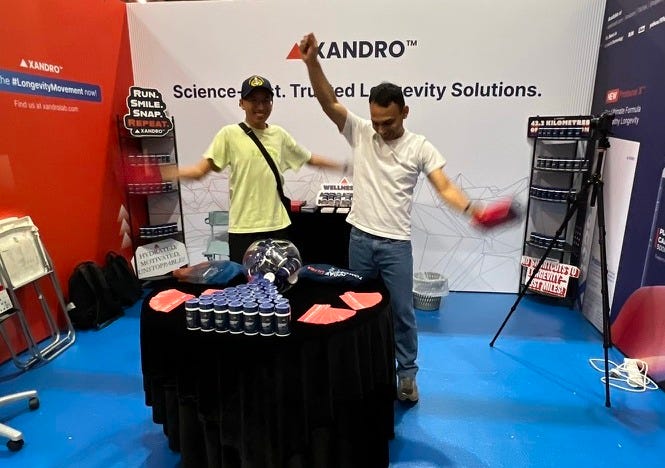
After that, I changed the hiring model. I stopped prioritising experience and started hiring interns and fresh graduates who could be trained. The intern-to-full-time model worked well when I already knew the direction and needed someone to execute it. It also gave us people who were excited to trying new approaches to marketing.
Then that model reached its own limit. Not every good intern becomes a strong full-time employee. Short internships meant we were hiring, training and starting again every few months. Just when someone understood the work, they left. We stopped accepting short internships and started looking for longer commitments.
We also placed managers in the functions where continuity mattered most. The aim was to create a core team that could keep the company running while interns, freelancers and junior members moved in and out around it. That structure is much more stable today.
The latest hiring shift is probably the biggest one. For most of the last three years, I came up with the ideas, campaigns and ways of working, and the team executed them. I needed people who could understand my ask and figure out how to get it done.
That is no longer enough. I am now looking for people who can make the brand more interesting, bring ideas I would never have, and challenge my own thinking. When I look at our social media today, it already feels very different from four or five months ago because more people are contributing to what it can become.
Earlier, I hired people who could follow my thinking. Now I need people who can take it somewhere else.
5. Learning to be a “boss”
While the team was changing, I was also learning how to be the final decision-maker.
Before Xandro, I had senior roles, but I was never the person who could take every call. At Xandro, I wanted people to own their areas. When I had to step into someone else’s role and make a decision, I felt bad. It felt like I was taking their responsibility away. At the same time, I was frustrated that the decision had reached me at all.
That hesitation created its own problems. Some decisions sat for too long. Sometimes I waited for someone to reach an answer when the company needed a call that day. Then I would step in late, already irritated, and the conversation would become harder than it needed to be.
I am faster now. I can usually tell when someone needs time to work through a problem and when I need to jump in. I do not feel the same guilt about taking a call anymore. The company still needs an answer even when the ownership is unclear or the person is not ready.
I am also more conscious of what happens after I step in. If I keep making the same decision again and again, then I have not solved the problem. Either the person needs more context, the role needs to change, or the system is badly designed.
I am still learning how to do this without becoming impatient or controlling. The difference is that I no longer avoid the responsibility because it feels uncomfortable. Three years into building Xandro, the company has been rebuilt several times, and so has my idea of what my own job is.
I used to think that once the right products, people and systems were in place, the company would finally feel settled. I do not think that anymore. We fix one layer, grow into a new problem, and start again.
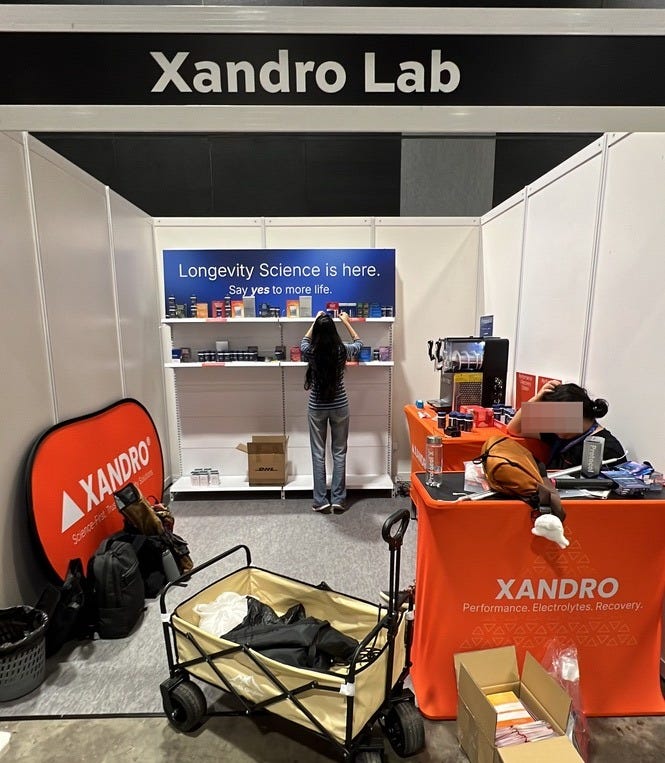
Thanks for reading this. It’s my own little journal + learning platform. I love sharing these experiences and speaking with people who are building.
On a side note, all this rebuilding has created a strange feeling. I sometimes crave the idea of starting from zero again. It would be risky and full of uncertainty, but surprisingly, the thought does not scare me. It feels quite exhilarating.
Until next Sunday,
Shan
The realization that rebuilding the company over and over is the actual work ..... that's the kind of honesty more founders need to hear.