Operator Notes on Trade-offs
Nothing breaks you more than realising that progress itself is a negotiation. Between what you want to do and what you can actually pull off.
Hi, I’m Shan. I run Xandro Lab - a science-first longevity brand in Singapore focused on performance and recovery. Every Sunday, I sit down here on Out of Singapore to write what’s really going on - not the headlines, but the in-between parts.
I started this in 2023 as a personal journal. A place to think aloud, record the process, and look back one day to see how my thinking evolved. Some weeks are exciting, some confusing, some just plain slow. This one is about the last part — the slow.
Lately, I’ve been feeling a bit off. Not in a dramatic way. Just uneasy, like something’s out of rhythm. The business is fine. We’re growing, maybe even better than I thought last year. But somehow, it doesn’t feel enough.
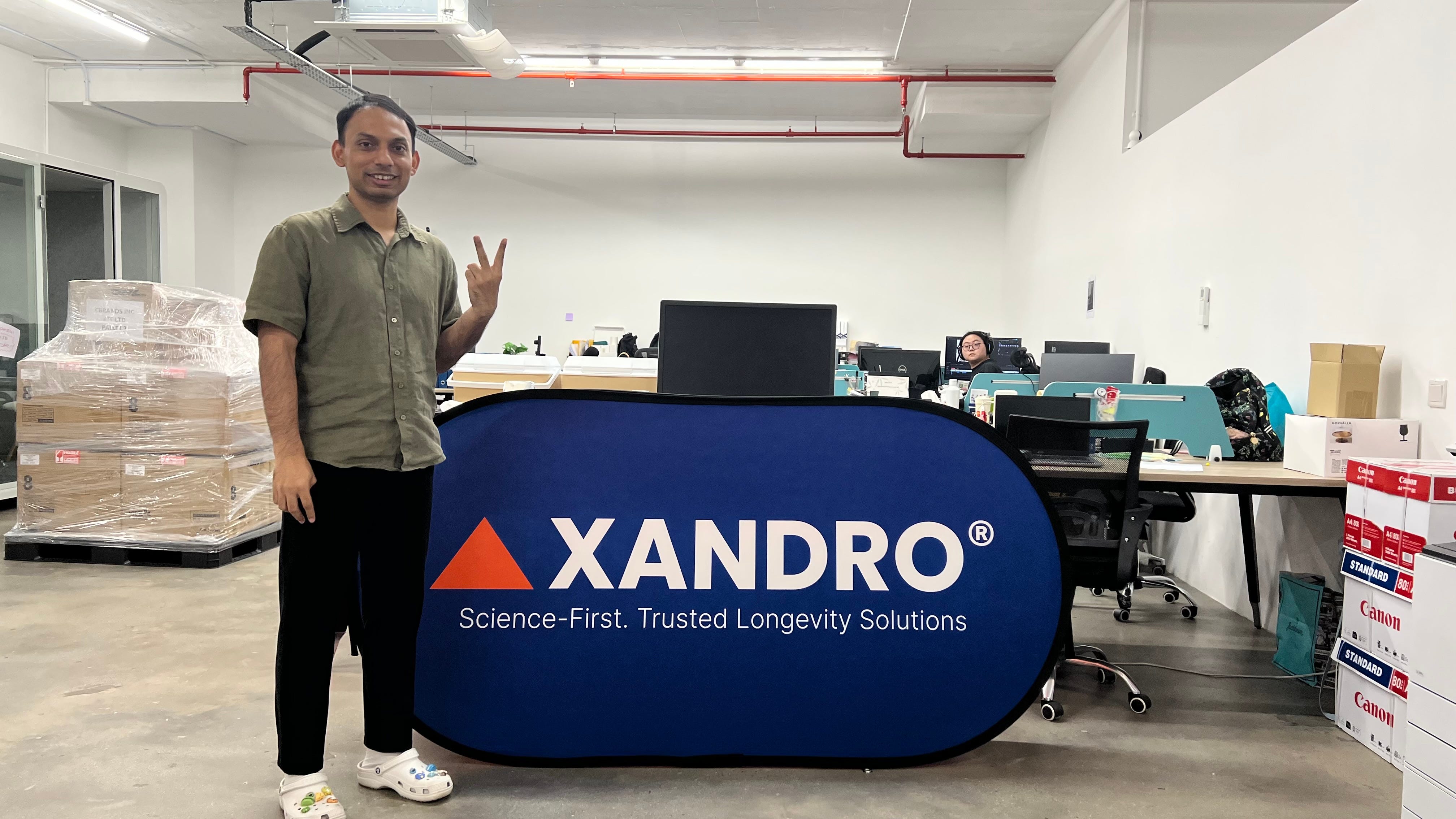
I am in that strange middle space where everything’s working, but not in the way you imagined. The numbers look okay. The brand is moving. The community is alive. But I still end most nights feeling like I could’ve done more — that we should’ve been further by now.
Last year, I was scared we might shut down. Then October happened, then Singles Day happened. We ran out of stock (as always) and we came out stronger. And that’s probably why this phase feels harder. Because when you’ve already survived, you start expecting take-off — that steep, dramatic curve. Instead, what you get is a long flat stretch that tests your patience and belief.
I’ve been thinking a lot about that lately. About progress. How it’s never free, how every next step demands a trade-off. Between what I want to build and what I can actually afford to. Between focus and expansion. Between survival and speed.
So this week’s note is about those trade-offs. The choices I made this year, the ones I didn’t, and the quiet, sometimes uncomfortable reasons behind both.
Today’s reading -
When Growth Feels Like Failure
Product Launches — Choosing Depth Over Speed
Product Roadmap — Identity vs Opportunity
Brand Building — Showing Up Offline
Distribution — Control vs Growth
Focus and Identity — Who We’re Becoming
Closing Notes
1. When Growth Feels Like Failure
It’s strange to call this a good phase and still feel so defeated inside. On paper, everything looks okay. We’re growing, month after month. We’re not in trouble, not even close. Yet most evenings, when I finally stop working, I feel like I’m failing.
It’s not one big thing. It’s the accumulation of small things that didn’t go the way I wanted. The new products that are still stuck. The inventory problems that keep repeating. The capital I haven’t managed to raise. The brand that still doesn’t look as premium as I know it can. The communication that doesn’t always land the way I hear it in my head.
All of these pile up quietly, and by the end of the day, they turn into this dull ache of “I should have done more.”
What makes it worse is that no one else really sees it. From the outside, people see momentum, not the micro-failures inside it. But I see every detail — every broken process, every missed opportunity, every delayed reply that could’ve changed a conversation. And when you’re the one responsible for all of it, even when you’re not doing the work yourself, the failure still sits with you.
There are days when I tell myself I’m doing fine, that we’re still early, that this is normal. And then there are days where I can’t believe I’m repeating the same mistakes again. Delegating too late. Communicating too vaguely. Moving too slow.
I think what I’m learning is that growth doesn’t feel like growth when you’re in it. It feels like a series of repairs. Every day you fix something, and another thing breaks. Every win is half-shadowed by the next problem you have to solve.
And maybe that’s what this phase is — learning to stay steady even when you feel you’re falling behind. To remind yourself that not all failure is visible, and not all progress feels good while it’s happening.
2. Product Launches — Choosing Depth Over Speed
At the start of this year, I told myself something very clear: no more half-products.
If we launch something, it needs to command scale — big enough to have its own P&L and team, like Dove or Mountain Dew or Pepsi. It has to be that big.
I took a product-first, brand-second approach. People should know Protocol X first, then Xandro. Why I chose this path — that’s a discussion for another time.
We could have launched many more products. The formulas were ready. The designs were ready. But the conviction wasn’t.
Protocol X was always meant to be the flagship, and I wanted to give it a fair run. I’ve started seeing it as our big break globally.
LPC Neuro took off faster than I expected. It started as an experiment but became our strongest performer. In leaning so heavily on Protocol X, LPC hasn’t received the attention it deserves. It’s the typical challenge of bringing something new to market — it needs a lot of education, and education takes time.
And then there’s Magnesium Glycinate — quiet, dependable, the product that sells every single day without much noise. Between these three, most of our time and money got absorbed.
Electrolytes should’ve been out by June. They got pushed again and again. The formulation was ready, but production didn’t move on time. We waited for packaging, then the flavor feedback loop dragged on. When the formula was finally done, a key ingredient stopped the whole process — wrong mesh size. We had to repurchase it. The entire production got delayed by a few more months.
The spray version of electrolyte is still waiting. It’s been on the “coming soon” list for almost five months.
Then there’s the Protocol X Serum. That one stings a little. We started talking about it last year, and I thought it would be out soon. But it’s still in the queue — labels done, formula ready, but funds and production timelines clashing again. I actually paused it for six months because I wasn’t convinced it fit the brand yet.
Looking back, this entire year became a cycle of postponing launches to protect focus. Every time I wanted to push something new, I had to ask myself: can we really afford to market it properly? Because launching is easy. Educating people is expensive.
I didn’t want to become another supplement brand with fifteen SKUs that no one remembers. So I stayed with the few that were already building trust — even if it meant slower growth, fewer launches, and the constant guilt of “not doing enough.”
The trade-off was clear. We built stronger loyalty, but lost momentum. Our returning customer rate went up, but the top line flattened.
It’s frustrating. But it’s real.
3. Product Roadmap — Identity vs Opportunity
There were easier ways to grow this year. We had formulas ready for a few products that would have sold fast — a constipation relief formula, a fat-burner, and a testosterone booster.
We knew exactly how to position them. I’ve seen brands hit huge numbers with these products. But I kept holding onto them, in a way delaying them and saying no.
Those products won’t build who we want to be. They might have made money, but they wouldn’t have made identity.
I wanted Xandro to stand for performance, recovery, and longevity. Not shortcuts. Something that helps people add capacity, not strip things away.
It’s a slower, harder lane to build in.
The truth is, slimming products are easy to sell. Everyone wants to lose weight. The marketing writes itself. But it’s also the easiest way to dilute trust. Once people start associating you with vanity-based outcomes, you lose credibility with the science-first crowd — the people who actually stay long-term.
So, we left money on the table. We said no to quick SKUs that could have boosted sales in the short term, and focused instead on products that could define us for the next few decades.
Protocol X is that bet. LPC Neuro is that bet. Magnesium Glycinate quietly reinforces it every day.
But this clarity came with confusion too. Because the more you say no, the more your brand definition gets tested. Who are we really? Longevity? Performance? Recovery?
It’s all of them, but none of them perfectly.
We’ve been learning what people see when they see us. Most new customers think of Xandro as a performance brand — the one that athletes or high-functioning people use to train better, sleep better, and recover faster. And that’s fine. But it’s also incomplete.
We’ve started calling ourselves a “high-performance longevity” brand internally.
It’s not a neat category, but it’s ours. The challenge now is to make sure every product, every launch, every story fits that vision.
This year, the product roadmap forced me to pick sides — speed or substance, familiarity or focus. And though it’s been slower than I expected. We might not have the widest range, but everything we do stands for something.
4. Brand Building — Showing Up Offline
This year, a lot of our time went into showing up. We did more events than ever before.
Sleep science workshop, Chill Movement, Urban Throwdown, Solas Pilates, Overseas rooftop activations, community parties — every one of them took time, planning, and people.
Events aren’t easy. They look simple on Instagram, but every setup is chaos.
Inventory, sampling, logistics, transport, weather, and resource planning was challenging time. We had to do these while ensuring the revenue keeps flowing and marketing campaigns don’t get disrupted.
Online gave us scale, but offline gave us the truth. You can see who actually uses your product, who just knows the name, and who doesn’t care at all. The feedback is immediate. People tell you what they feel, what they like, what’s missing.
At Urban Throwdown, people queued for the electrolytes like it was an energy drink. Last year at Singapore Marathon, our booth stayed crowded the entire weekend.
Those were the days I could see the brand alive — faces, reactions, energy. Not dashboards.
We also started doing smaller pop-ups. Few Pilates classes at Solas. Two beach events. A rooftop hydration setup. Some of them worked, some didn’t. But they built presence. People started recognizing the brand physically.
The trade-off is that these events take time away from everything else. They don’t scale. They don’t give you numbers immediately. But they build something slower — familiarity.
After a few of these, I realized we’re building a different kind of awareness. People might not remember the ads they saw online, but they remember meeting us at an event. They remember the team, the free sample, the heat that day, the conversation.
5. Distribution — Control vs Growth
Distribution has been one of the hardest parts to get right this year.
We grew fast online, but scaling beyond that came with too many moving pieces.
Livestream Distribution
At the start of the year, we added new livestreamers — Dr Eugene, Lucas, Alan Wu, and a few others.
It looked like the right move. More voices, more audiences, more reach. But soon, the cracks showed.
Some had better voucher codes, some had access to different pricing. Customers started comparing across streams. Several complained. We lost a few partners because of that.
It wasn’t their fault. The structure wasn’t ready. We didn’t have a clear system on pricing control, or rules for discounting, or even how to coordinate who talks about what. I wanted to move fast, and it created friction.
Now, even though livestreams remain our biggest channel — especially on TikTok — we’re more cautious. We’ve seen how quickly the ecosystem can turn competitive within itself.
The top creators perform well, but keeping everyone aligned takes constant attention. It’s not plug-and-play anymore. It’s management.
Retail Distribution
We’ve talked about retail a few times this year — placement at gyms, supplement stores, even a few wellness chains. But I didn’t push it forward.
The math didn’t add up. The moment we enter retail, we lose control. Margins will get sliced, pricing becomes rigid, and every campaign online has to be coordinated with store prices. You can’t run promotions, you can’t A/B test bundles, you can’t move fast.
Retail also risks channel conflict with livestreamers. If someone is selling on TikTok for one price and retail is listing it differently, it immediately causes frustration. We’ve already seen what small voucher differences can do in livestreaming. Adding retail would make that worse.
So for now, we’ve stayed away. Not because it isn’t tempting — retail gives credibility — but because we’re not ready for the complexity. I want to build it properly when we have enough inventory buffer, consistent pricing control, and a larger team to manage partners.
Right now, direct distribution keeps us cleaner. Fewer layers with more flexibility. It limits reach, but it keeps the system intact.
6. Focus and Identity — Who We’re Becoming
The more we grow, the more I think about who we are. Not in a branding sense, just in how people perceive us.
When we started, the focus was longevity. That was the word we used everywhere. Over time, people started calling us a performance brand. Customers today discover us through ads, livestreams, or events.
Most of the faces on social media are of people training, running Hyrox, doing CrossFit. It’s become very sporty. Someone even tagged us as a “sports performance brand” on their Instagram story.
People think of us as something that helps them perform better, not necessarily live longer. And maybe that’s fine.
I’ve started to see performance as the bridge to longevity. If you take care of your energy, focus, sleep, and recovery, you’re already doing the work of longevity. That’s the lens we’ve been building around.
We call it “high-performance longevity.” It’s not a neat category, but it describes where we are right now — somewhere between fitness, wellness, and science.
Every time I think about what comes next, I measure it against that line. Does it make people stronger, sharper, or more resilient? If it doesn’t, it’s probably not for us.
Internally, this clarity helps. It guides what products we make, which collaborations we say yes to, and how we talk about ourselves. Externally, it’s still evolving.
Some people come to us for Magnesium Glycinate and stay for Protocol X. Some discover LPC Neuro and then find the rest of the lineup. Everyone’s entry point is different, but the story has to connect.
We’re still figuring out that connection — how to be seen clearly, without forcing it.
Right now, we’re in between what we started as and what we’re becoming. That’s not a bad place to be. It just means we’re still building.
7. Closing Notes
This year felt slower. Not because we weren’t working hard, but because the results didn’t always move in sync with the effort. Every decision came with a cost. Focusing on one product meant delaying another. Showing up at events meant losing a week of campaign work. Protecting margins meant giving up reach. None of this was a surprise, but living through it, week after week, was still tiring.
Some days I feel proud of what we’ve built. Other days I just feel late — like everyone else is moving faster, raising more, launching more. It’s hard to hold both thoughts together. But maybe that’s the real part of building — living inside that constant negotiation between ambition and capacity.
Right now, I’m learning to be okay with the pace. To keep building even when the graph isn’t exciting. To keep believing even when momentum feels flat. It’s not glamorous, but it’s where most of the real work happens.
PS. There are evenings I go home feeling like a failure. Not because things are broken, but because they’re unfinished — products still stuck, inventory not fixed, capital not raised, the brand not as premium as it should be, the message not as sharp, the energy not as consistent. Even if I’m not the one doing it, I still feel responsible for making it happen. Failing to delegate is also failure. Failing to communicate right is failure.
It’s painful, but it keeps me grounded. Maybe that’s the part no one talks about enough — how much of building a company is just learning to live with your own unfinished work.
That’s all for this week. Writing this helped me slow down and make sense of what’s been sitting in my head these past few months. If you’re building something and feel stuck, I hope this gives you a bit of company.
See you next Sunday,
Shan


