


Hi, I’m Shan. I run Xandro Lab, a longevity science brand in Singapore. Every Sunday I write these notes, part building diary, part thinking out loud.
Every supplement brand claims to be backed by science. They cite research papers, reference published studies, explain biological mechanisms, and build credibility from work that has already been done. That’s where we started too. For the first few years, our focus was on understanding the science behind every ingredient we used, writing scientific white papers, working with researchers, partnering with universities, and making sure every product had a strong scientific foundation.
The question that kept coming back, however, was much harder. When does ingredient-level evidence stop being enough? One of the earliest discussions around Protocol X captured it perfectly. The ingredients have evidence, but where is the evidence for the formulation itself? That question changed how we think about research. Instead of asking how to find more papers to support our products, we started asking how to build an organisation that gets better at generating evidence every year. This article is the framework we’ve developed so far.
Today’s read:
Borrowed Evidence
Own One Problem
Consumers Don’t Buy Biomarkers
Evidence Compounds
Build the Machine
1. Borrowed Evidence
Every science-first consumer brand begins by borrowing credibility. You study the published literature behind the ingredients you’re considering. You understand the biological mechanisms, look at clinical trials, evaluate doses, and decide whether the evidence is strong enough to justify building a product. Every responsible company should do this. If there’s no scientific rationale behind an ingredient, it probably shouldn’t make it into the formulation in the first place.
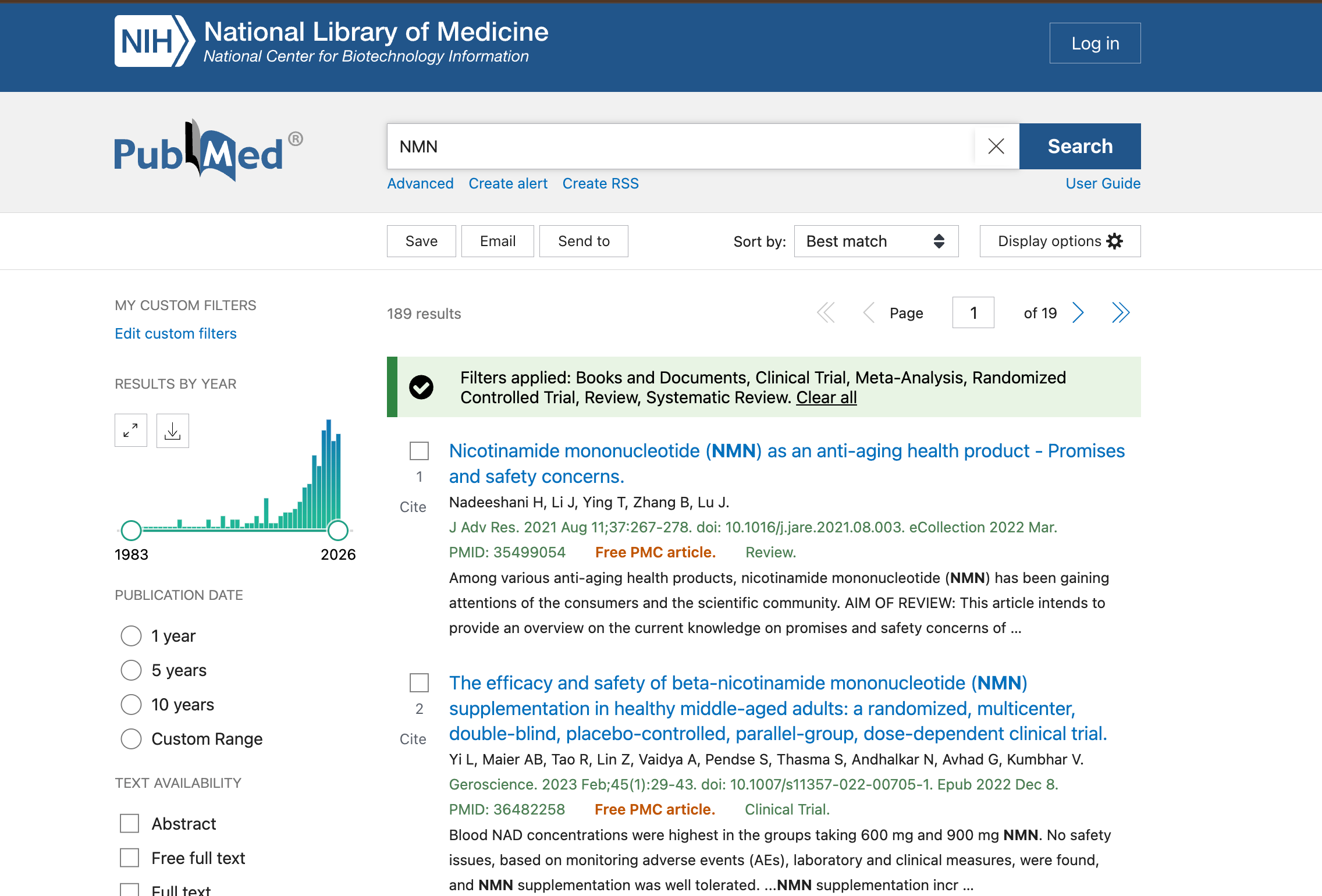
But something changes as your products become more differentiated. A formulation isn’t simply a collection of ingredients. The dosages change. The ratios change. Ingredients interact with one another. Delivery systems evolve, whether that’s liposomes, micro-encapsulation or something entirely new. Over time, the finished formulation becomes something that has never been studied before.
That’s when the question changes too. You’re no longer asking, “Is there evidence behind this ingredient?” You’re asking, “Is there evidence behind this formulation?” Ingredient-level evidence gives you the confidence to start, but it doesn’t automatically prove that the finished product delivers the same outcome. At some point, that responsibility shifts from the scientific community to the company building the product.
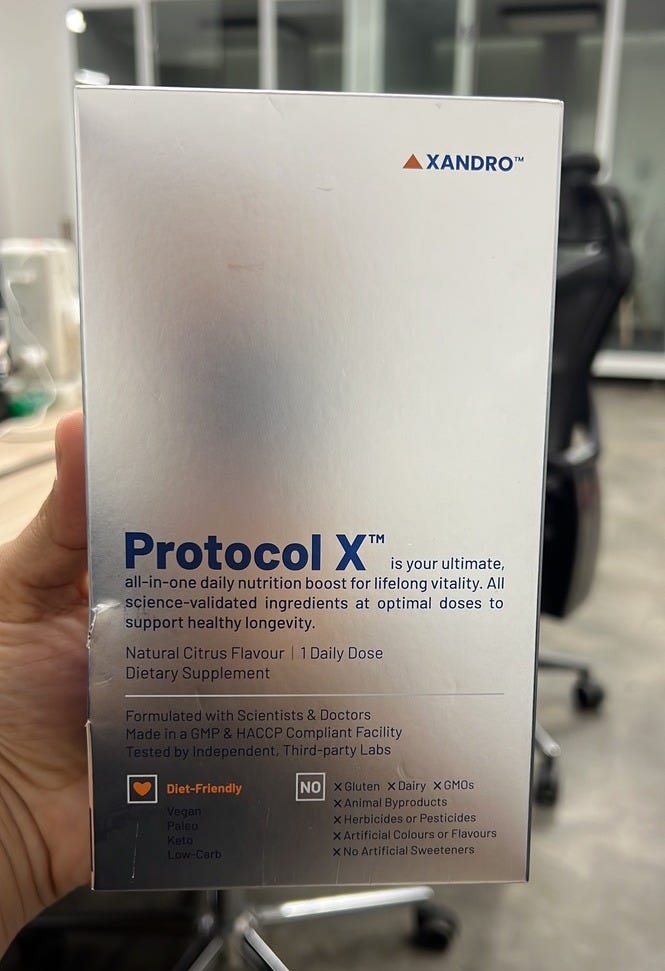
This was exactly the question that came up during discussions around Protocol X. Our Scientific Advisory Committee challenged us on a simple point. The individual ingredients had evidence, but where was the evidence for the formulation itself? It was a fair question, and one we didn’t have a good answer to at the time.
That conversation changed how we thought about research. Instead of looking for more papers to support our products, we started asking a different question:
How do we become a company that produces evidence instead of simply consuming it?
That shift eventually led us towards human studies, laboratory collaborations, and a much larger ambition, not to run individual studies, but to build a repeatable system for generating evidence across every product we launch.
2. One Product. One Problem.
One of the biggest mistakes a science-first brand can make is trying to validate every possible benefit of a product all together. We made that mistake ourselves.
Pick any longevity supplement. It could potentially improve energy, recovery, cognition, inflammation, healthy ageing, exercise performance and sleep. If you ask the formulation scientist, they’ll probably add another five benefits to the list.
But consumers don’t remember products with ten benefits. More importantly, designing a study around ten different outcomes almost always results in a complicated protocol, weaker conclusions, and marketing that tries to say everything but ends up saying nothing.
Instead, every product should begin by owning one clearly defined consumer problem.
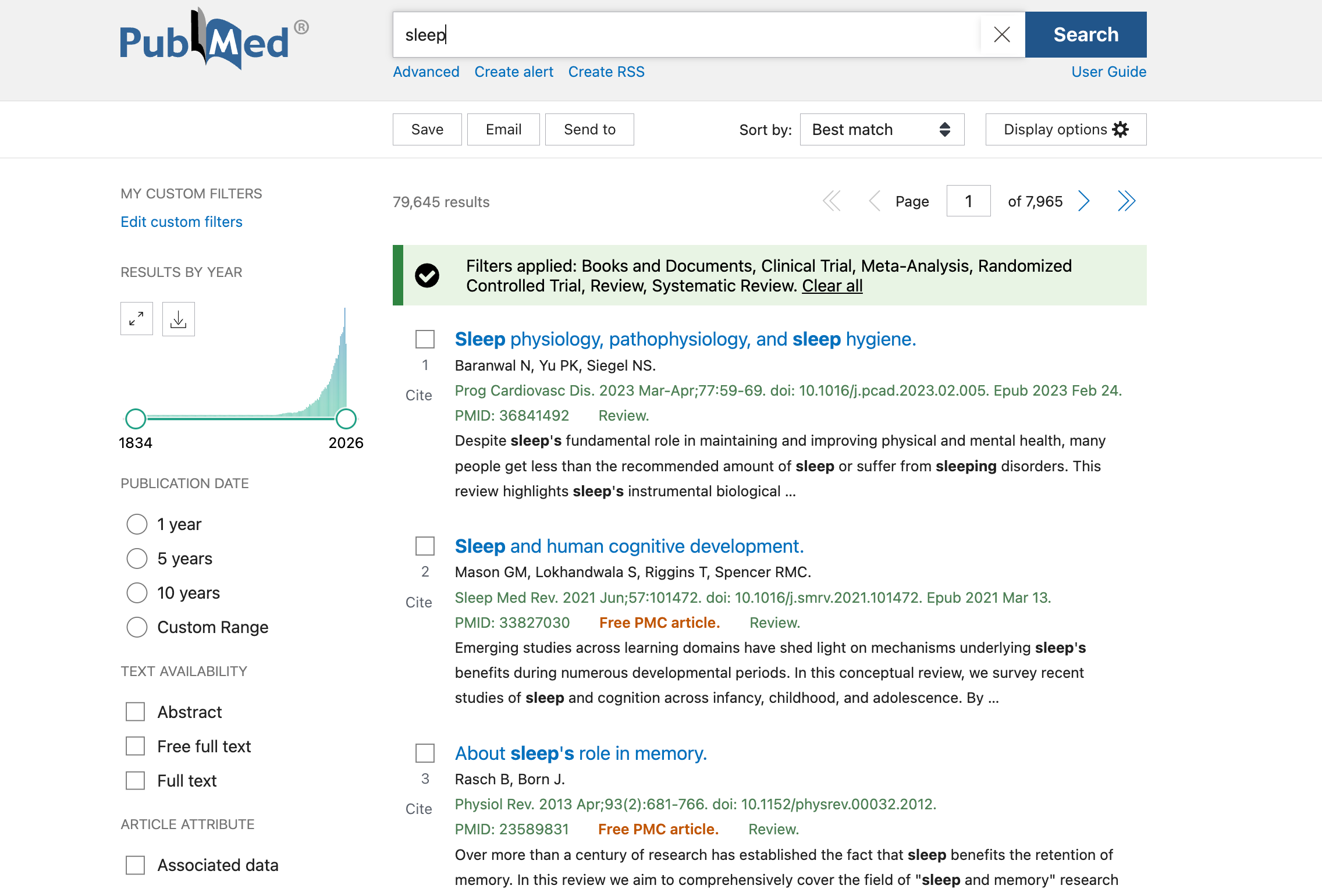
For example, a sleep product could focus on sleep duration. A joint product could focus on knee discomfort. A cognition product could focus on memory. A longevity product might focus on fatigue or exercise recovery. There may be many other benefits, but the first objective is to become known for solving one problem exceptionally well.
This changes both the research and the positioning of the product. Once you’ve identified that primary problem, everything else becomes simpler. You know which population to recruit, which outcomes to measure, which questionnaires to use, and ultimately what story you’re trying to tell. The research becomes more focused, and so does the marketing.
That doesn’t mean the product only has one benefit. It simply means you earn the right to talk about the second and third benefits after you’ve established credibility in the first. Evidence, much like brand equity, compounds over time. Trying to prove everything on day one usually achieves the opposite.
When we started mapping our own research pipeline, this became one of the principles we kept returning to. Every formulation has multiple possibilities, but every formulation should start with one problem. Build strong evidence there first. Expand later.
3. Consumers Don’t Buy Biomarkers
As we started planning human studies, one question kept coming up.
What should we actually measure?
Scientists naturally gravitate towards biomarkers. They’re objective, quantifiable and often provide a better understanding of what’s happening inside the body. Whenever possible, we should absolutely measure them.
The problem is that biomarkers rarely mean much to consumers on their own.
Take NAD as an example. We completed a human study on Protocol X showing an increase in blood NAD levels. From a scientific perspective, that’s valuable. It demonstrates that the formulation is biologically active and provides evidence that it’s doing what it was designed to do.
But almost nobody wakes up wanting higher NAD.
They want to feel less tired during the day. They want to recover faster after training. They want to stay mentally sharp through a long meeting. They want to have enough energy left to spend time with their family after work.
Those are the outcomes that matter.
That doesn’t make biomarkers less important. It simply changes the role they play. Biomarkers explain why a product works. Consumer outcomes explain why someone should care.
The best studies connect the two. They demonstrate a biological change while also showing a meaningful improvement that people can recognise in their daily lives. That’s where science becomes useful beyond the laboratory, and where research becomes much more powerful as a tool for building trust.
When we’re designing studies today, we spend as much time discussing the consumer outcome as we do the scientific endpoint. Both matter. One gives the research credibility. The other gives it relevance.
4. Evidence Compounds
Once you’ve identified the problem you’re trying to solve and how you’ll measure it, the next question becomes straightforward.
What should the first study look like?
For most consumer brands, the answer isn’t a large clinical trial.
Clinical trials are expensive, time consuming, and difficult to execute well. More importantly, if you’re still learning which population responds best, which outcomes are most meaningful, or even whether your hypothesis is correct, jumping straight into a large trial can be an expensive mistake.
We think about evidence as something that compounds.
The first study should answer a simple question. Does the product appear to help the people we designed it for? It doesn’t need to answer every question. It just needs to provide enough confidence that you’re moving in the right direction.
If the signal is promising, the next stage is to strengthen that evidence with more objective measurements. That could include biomarkers, cognitive testing, wearables, blood work, or any measurement that’s appropriate for the product. At this stage, you’re moving beyond what people report and beginning to understand what’s changing physiologically.
Only after building confidence through these earlier stages does it make sense to invest in larger, controlled clinical trials. By then, you have a much better understanding of who the product is for, what outcomes matter, and how the study should be designed.
Each study reduces uncertainty. Each study answers one question and raises the next. Over time, you aren’t just collecting publications. You’re building confidence in the product, confidence in the formulation, and confidence in the decisions you make as a company.
That’s why we think of research as a long-term capability rather than a series of isolated projects. Every study should make the next study better.
5. Build the Machine
The biggest lesson from all of this is that we’re no longer trying to build studies. We’re trying to build a machine that produces them.
Every study teaches us something beyond the results. We learn how to recruit participants, which populations respond best, which endpoints are meaningful, which partners are good to work with, where participants drop off, how long studies actually take, and how to translate scientific findings into something consumers can understand. Even when a study doesn’t produce the outcome we hoped for, it still makes the next study better.
Over time, that learning compounds. Research stops being a project and becomes a capability. Instead of asking whether we should conduct another study, the organisation naturally becomes better at identifying the right questions, designing better protocols, choosing better outcome measures, and generating stronger evidence across every product we launch.
I think that’s where science-first consumer brands can truly differentiate themselves. Every company can hire scientists. They can cite published papers. They can commission a clinical trial if they have enough money. Very few build an organisation where generating evidence becomes part of how the company operates.
We’re still at the beginning of that journey ourselves. This framework will continue to evolve as we launch more products, run more studies and inevitably discover where we’re wrong. But the objective is much clearer today than it was when we started.
We’re no longer trying to prove that our products work.
We’re trying to build a company that gets better at proving it every year.
Today’s write up is based on the last 3 years of trying to be stronger science company, as well as to support the longevity space. I am afraid of brands that enter this without knowing anything about longevity, borrowing evidence and making claims that endanger the entire ecosystem.

I vividly remember how difficult it was for me to initially claim that we are a “longevity brand”. I was afraid what will consumers perceive of this word and what will be their expectation. The fear is still with me. I want to have better answers to the question - “What is longevity?”
That’s all for tonight. I will see you again next Sunday!
Cheers!
Shan